

Stomach cancer is also referred to as gastric cancer and grows as a result of the uncontrolled growth of abnormal cells on the stomach lining. Globally, it is one of the leading causes of cancer-related deaths. The silent nature of this disease is one of its biggest problems. The initial symptoms are often ignored as ordinary routine gastritis which is way more common than stomach cancer. Severe symptoms tend to manifest much later, when the condition is at an advanced stage, hence complicating treatment. It is therefore necessary to know the stomach cancer risk factors to have early awareness, prevent it and seek medical attention on time.
The reasons behind the late detection of stomach cancer
Stomach cancer may take months to be detected, unlike other types of cancer, which have clear symptoms of danger. Light symptoms like acidity, bloating, or indigestion are either overlooked or treated using over-the-counter drugs. The disease might have reached other parts of the body besides the stomach by the time it manifests itself with serious symptoms. That is why an understanding of the stomach cancer risk factors is significant in terms of mitigating the risks to health in the long-term.
Typical causes of Gastric Cancer that you should know
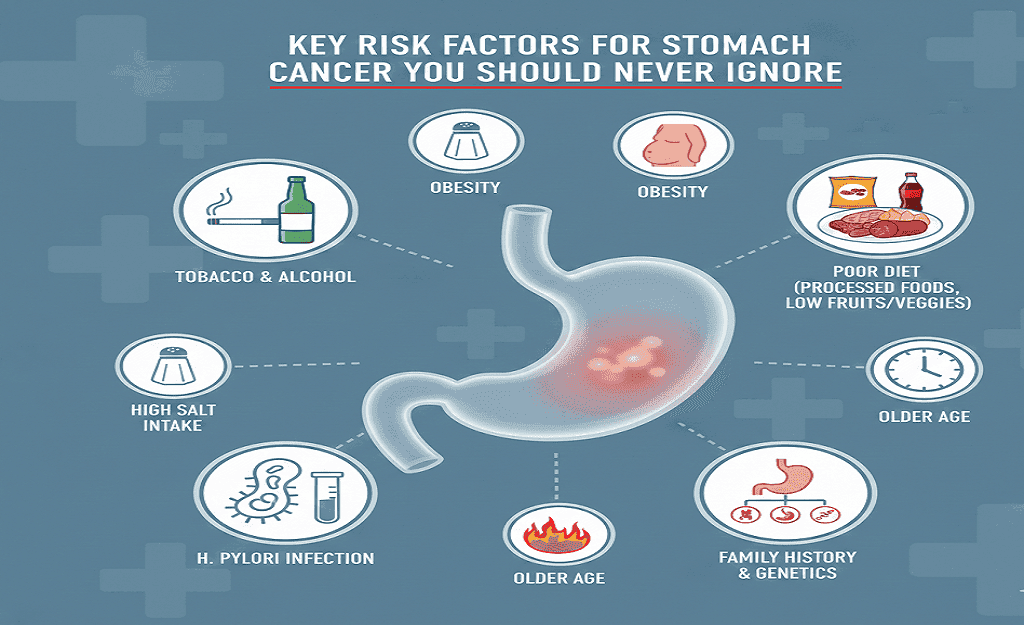
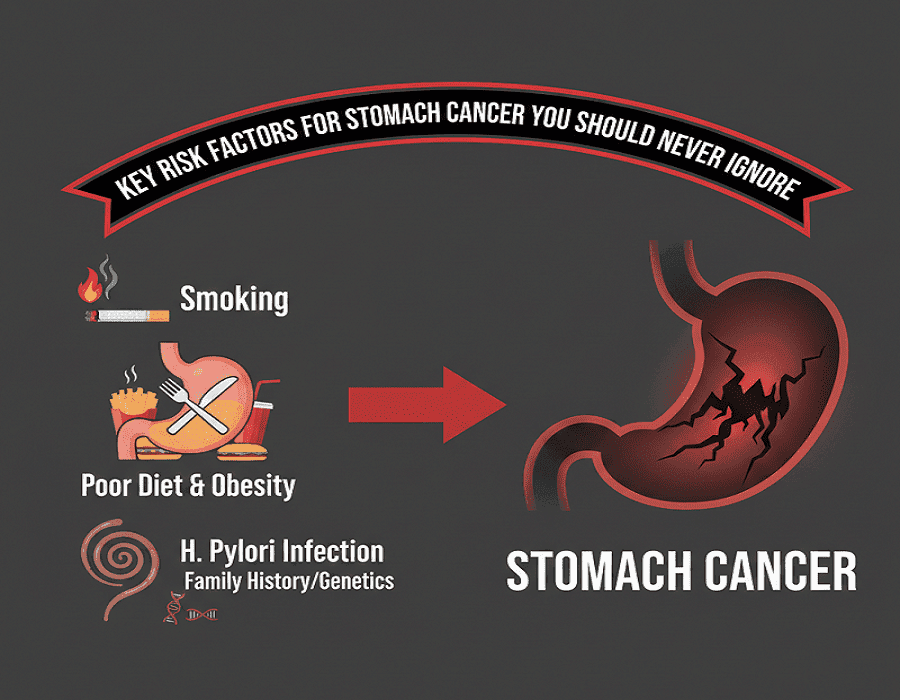
Stomach cancer has no single cause. Rather, this is typically acquired as a result of a conglomeration of lifestyle, food, environmental, and medical causes. Some of the most common causes of gastric cancer that cannot be ignored are highlighted below.
1. Helicobacter pylori (H. pylori) Infection
Infection with a bacterium known as Helicobacter pylori is also among the largest risk factors for gastric cancer. This bacterium enters the stomach lining and may lead to chronic inflammation of the stomach lining which is called chronic gastritis. This inflammation may destroy stomach cells and lead to the development of cancers if it is not treated over a long period of time. Research indicates that untreated H. pylori infection is associated with a high proportion of gastric cancer in the world. This risk can be avoided by using proper hygiene while consuming foods and water and also timely diagnosis followed by effective medical care.
2. Unhealthy Dietary Habits
Diet has a significant impact on the well-being of the stomach. The risk factors for gastric cancer are increased by the frequent intake of high-sodium content foods, smoked and pickled foods, or preserved foods. Pickles, dried fish, smoked meat, sausages and foodstuffs with a lot of salt all scratch the stomach coat in the long run. This is the reason gastric cancer is more common in areas where such types of foods are consumed a lot. Exposure to these harmful factors can be reduced by improving dietary habits, such as consuming fresh fruits and vegetables and consuming foods high in fibre.
3. Smoking and Alcohol Consumption
Smoking has been known to be a risk factor in most cancers, such as gastric cancer. The smoke of tobacco brings some poisonous chemicals into the digestive tract, destroying the stomach lining and increasing the risk of cancer. Alcohol, particularly that are regularly taken, exacerbates the stomach further and increases the negative impacts of smoking. Studies have shown that smokers who consume alcohol are at a much higher risk of getting gastric cancer than people who do not indulge in this vice.
4. Chronic Acidity and Acid Reflux
Indigestion or acid reflux can be ignored as a minor issue over a long period of time. Intraprolonged acid reflux may however damage the protective lining of the stomach and lower oesophagus. This recurrent trauma over time raises the risk factors of gastric cancer. Letting the chronic inflammation go unnoticed by simply suppressing symptoms with antacids instead of treating the underlying cause is a possibility.
5. Genetic Factors and Family History
Individuals who have a family history of stomach cancer are at risk of developing the disease. Some inherited genetic disorders might also predispose individuals. Although genetics is unchangeable, diet, smoking, and untreated infections are other modifiable risk factors of stomach cancer which should be of particular concern to persons with a family history.
6. Stomach Polyps and Past stomach conditions
Some benign tumours known as stomach polyps may be risk factors in cancer especially when large or untreated. Permanent stomach diseases like chronic gastritis, pernicious anemia or a history of stomach surgeries are also likely to increase the risk of gastric cancer in due course.
Identifying Symptoms That Should Not Be Ignored
Even though at its initial stages, stomach cancer might not have any apparent symptoms, certain warning signs may be recognised when the disease advances. These are recurrent fatigue, chronic heartburn, nausea, vomiting, stomach pain following meals, loss of weight, loss of appetite, persistent bloating, fullness, bloody or black stool and yellowing of the skin or eyes. Any person with these symptoms over a long duration is advised to receive medical care as soon as possible.
Diagnosis and Medical Assessment
Several tests and physical examination together with examination of medical history are used to diagnose stomach cancer. Possibly using CT scans or barium swallow tests, imaging studies can be used to evaluate the structure of the stomach. Endoscopy enables physicians to observe the stomach mucosa directly and to perform a biopsy on the tissues. There are other tests that are carried out to determine the spread of the cancer.
Treatment of Gastric Cancer
The treatment of gastric cancer is related to the stage of the disease, the general health, and the patient’s preferences. The treatment can be done through surgery to excise not only the tumor but also the surrounding regional lymph nodes, chemotherapy to kill cancer cells, or through the use of targeted therapy and immunotherapy. . Supportive care also plays a significant role in treatment in advanced cases with the need to deal with the symptoms and quality of life.
The treatment of gastric cancer has improved greatly and the chances of successful treatment are high in case the disease is diagnosed at an early stage. The medical teams today include various therapies together to enhance their survival chances and decrease complications.
Significance of Early Intervention and Prevention
Most of the risk factors of stomach cancer are controllable. Early treatment of H. pylori infection, maintaining low salt and smoked foods in the diet, cessation of smoking, moderate alcohol intake and seeking appropriate treatment of chronic acidity can help to significantly reduce the risks. Medical check-ups are particularly necessary for those people whose family history or stomach issues are long-term.
Stomach Cancer Treatment in Kolkata
Kolkata has become one of the principal centres of cancer treatment in eastern India. The patients who want to get treated by the Oncologists at Kolkata regarding stomach cancer can get access to the advanced diagnostic centers, experienced Stomach cancer doctor in Kolkata and extensive gastric cancer treatment options which include surgery, chemotherapy, radiation, and targeted therapies. Consultation with the specialists working in the city may be considered early, which will help in the planning of treatment and outcomes in high-risk people.
Final Thoughts
Stomach cancer is a serious condition, but awareness remains the strongest defence against it. Understanding the common causes of gastric cancer and recognising early warning signs can make a meaningful difference. Ignoring persistent stomach issues, poor dietary habits, or infections may increase long-term risks. By paying attention to these factors and seeking timely medical advice, it is possible to reduce risk, support early diagnosis, and improve the effectiveness of gastric cancer treatment.