Book Appointment
A lung cancer diagnosis can change everyday life in an instant. Breathing may feel more difficult, and unfamiliar tests, medical terms, and treatment decisions can make an already stressful situation even harder.
Dr. Sandip Ganguly provides Lung Cancer Treatment in Kolkata, with more than 14 years of experience in cancer care. As an experienced Lung Cancer Doctor in Kolkata and Medical Oncologist in Kolkata, he focuses on personalized, evidence-based care through a coordinated, multidisciplinary treatment plan based on each patient’s needs.
Lung cancer develops in the lungs, which are essential for breathing. Despite public awareness campaigns, the incidence of lung cancer continues to increase, and unfortunately, many patients are diagnosed at a later stage.
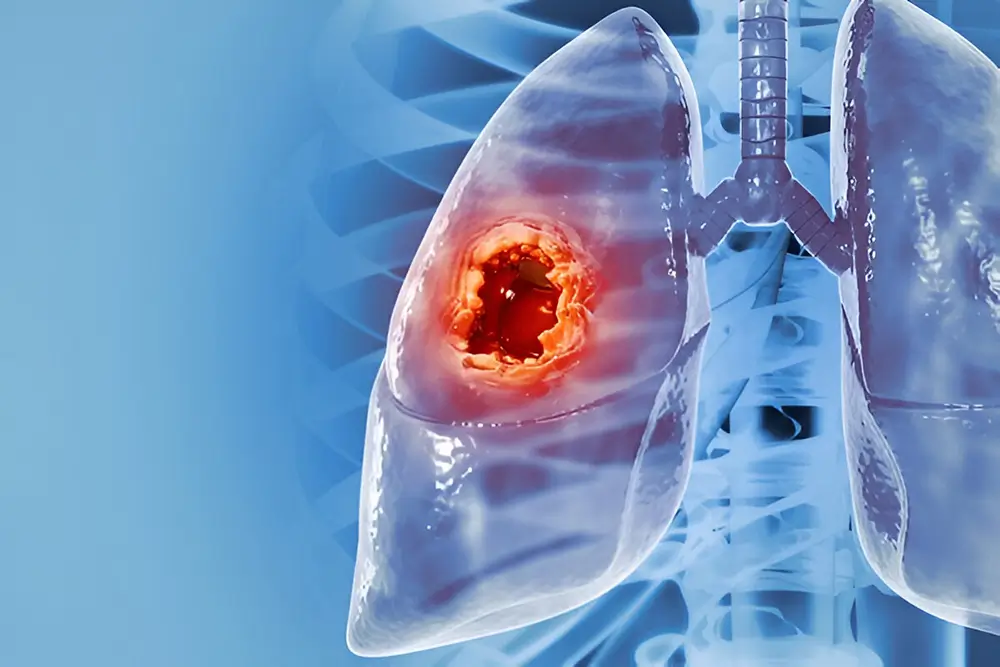
Lung cancer begins when cells in the lungs start growing abnormally and uncontrollably. Over time, these cells can form a tumor, grow into surrounding tissues, and spread to other parts of the body.
Several factors can increase the risk of developing lung cancer, including:
Because of environmental smoke and air pollution, lung cancer can also occur in people who have never smoked.
Lung cancer may not cause noticeable symptoms in its early stages. When symptoms do occur, they can sometimes resemble common respiratory conditions such as tuberculosis or COPD. This can make early detection difficult.
Common lung cancer symptoms include:
When lung cancer spreads to other organs, symptoms can vary depending on the area affected. Bone involvement may cause bone pain, while brain involvement may result in neurological symptoms and liver involvement may cause jaundice.
A lung cancer diagnosis involves several tests to confirm the presence of cancer, identify its histological subtype, and determine the stage of the disease.
The diagnostic tests may include:
A chest X-ray is commonly used as an initial imaging test.
A CT scan provides detailed images of the lungs and can help identify lung masses and involvement of lymph nodes.
A PET-CT scan helps assess whether the cancer has spread to other organs.
An MRI of the brain can help determine whether the cancer has involved the brain.
Bronchoscopy allows direct visualization of the airways and can be used to obtain a biopsy when the tumor is located in the bronchus.
A CT-guided needle biopsy can be used for peripheral lung lesions. It can also be performed from the most accessible area when the tumor has spread to another part of the body.
Endobronchial ultrasound (EBUS) can be used to assess lymph nodes in the chest and obtain samples when required.
Histopathology helps confirm whether a tumor is cancerous. Additional IHC studies can be performed to determine the type of lung cancer.
Molecular testing can identify genetic changes such as EGFR, ALK, and ROS1, along with PD-L1 expression levels. These results can be important when considering personalized and targeted treatment.
Pulmonary function testing helps determine how well the underlying normal lung is functioning. It is particularly important when the tumor is localized or locally advanced and before surgery or definitive chemoradiotherapy.
Lung cancer staging helps determine how far the disease has progressed and plays an important role in treatment planning.
Staging is based on the AJCC TNM system:
The stages include:
Early diagnosis can help identify lung cancer at an earlier stage. Regular screening may also be important for people who meet the criteria for being at high risk.
The appropriate Lung Cancer Treatment in Kolkata depends on several factors, including the type of cancer, stage of disease, molecular profile, and the patient’s overall performance status.
Lung cancer care may involve a multidisciplinary team that includes medical oncologists, radiation oncologists, pulmonologists, surgeons, and radiologists.
Depending on the individual case, treatment may include surgery, radiation therapy, chemotherapy, targeted therapy, or immunotherapy.
Lung cancer surgery is best suited for selected patients with early-stage I and II non-small cell lung cancer (NSCLC).
The surgical approaches mentioned include:
The choice of surgery depends on the individual patient’s condition and the extent of the disease.
Radiation therapy may be used for locally advanced lung cancer when surgery is not possible. Stereotactic Body Radiation Therapy (SBRT) may be used for localized tumors.
For brain metastases, Whole Brain Radiotherapy (WBRT) or Stereotactic Radiosurgery (SRS) may be used. Palliative radiotherapy can also be used to relieve pain caused by metastases.
Chemotherapy is used in different stages of lung cancer. Common chemotherapy drugs include platinum compounds such as cisplatin and carboplatin, which may be used in combination with other medicines such as pemetrexed, paclitaxel, and gemcitabine.
Targeted therapy can be considered when specific genetic mutations are identified through molecular testing of a biopsy specimen or liquid biopsy.
Examples mentioned include:
These treatments are available as oral therapies and can be considered when the relevant genetic changes are identified.
Immunotherapy helps the body's immune system recognize and attack cancer cells.
It may be used in PD-L1-positive or driver-mutation-negative advanced cancers. Depending on the situation, immunotherapy may be used alone or in combination with chemotherapy.
Checkpoint inhibitors mentioned on the page include pembrolizumab, nivolumab, atezolizumab, and tislelizumab.
Lung cancer can also affect people who have never smoked. The page notes that this is an increasing concern and that adenocarcinoma is a common histological type among these patients.
Some of these cancers may have EGFR or ALK mutations, making targeted therapy an option. These cancers can behave differently, which is why personalized treatment based on the patient’s condition is important.
Prevention and early detection are important aspects of lung cancer care.
The preventive measures mentioned include:
Lung cancer screening is intended to detect cancer at an earlier stage, even before symptoms appear.
The page recommends low-dose CT (LDCT) screening for high-risk individuals who meet the following criteria:
People who meet these criteria can discuss LDCT screening with their doctor.
A lung cancer diagnosis can affect many aspects of everyday life. Along with cancer treatment, ongoing care can help patients manage the effects of the disease and treatment.
Long-term care may include:
There have been developments in both the diagnosis and treatment of lung cancer, including liquid biopsy, AI-assisted imaging, and newer immunotherapy agents.
Clinical trials can provide access to newer treatment approaches and contribute to the development of future lung cancer care.
Dr. Sandip Ganguly is an experienced Lung Cancer Specialist in Kolkata who provides care for different types and stages of lung cancer.
His approach focuses on understanding the patient’s diagnosis and developing a treatment plan according to the type and stage of cancer, molecular profile, and individual needs.
Schedule a Consultation with Dr. Sandip Ganguly today - Top Lung Cancer doctor in Kolkata for expert diagnosis and personalized treatment.

Seasoned Oncologist , Lung cancer specialist in Kolkata with 15+ years of cancer care experience.
Life expectancy depends on cancer type and stage. Overall five-year survival is about 19%. For non-small cell lung cancer (NSCLC), it’s around 32%. Early stages like IA1 can have up to 92% survival, while stage IVB has almost none. On average, Stage 1–2 patients may live 33–55 months, Stage 3 about 12–28 months, and Stage 4 about 4–9 months. For small cell lung cancer, limited-stage survival is 12–16 months and extensive-stage 7–11 months.
Yes, many people live close to normal lives after lung cancer, especially with early detection and effective treatment. Modern therapies such as surgery, targeted therapy, and immunotherapy have greatly improved both survival rates and quality of life.
Lung cancer cannot be fully prevented, but risk can be reduced significantly. Avoid smoking, quit if you smoke, stay away from secondhand smoke, reduce radon exposure, and limit occupational hazards like asbestos. Healthy diet and exercise help overall health, but no vitamin or supplement is proven to prevent lung cancer.
The best treatment depends on cancer type, stage, and patient profile. Breakthroughs include targeted drug combinations like amivantamab with lazertinib, which can extend survival by many months, and immunotherapy combinations such as nivolumab with ipilimumab plus chemotherapy, which improve long-term survival. Other advanced options include drugs like Tagrisso, Imfinzi, and Lorbrena for specific genetic subtypes. Personalized treatment is now the global standard.