Book Appointment
A lung cancer diagnosis can change everyday life in an instant. Breathing may feel more difficult, and unfamiliar tests, medical terms, and treatment decisions can make an already stressful situation even harder.
Dr. Sandip Ganguly provides personalized lung cancer treatment in Kolkata, with more than 14 years of experience in cancer care. As an experienced lung cancer doctor in Kolkata and Medical Oncologist in Kolkata, he focuses on personalized, evidence-based care through a coordinated, multidisciplinary treatment plan based on each patient’s needs.
Lung cancer develops in the lungs, which are essential for breathing. Despite public awareness campaigns, lung cancer remains a significant health concern, and many patients are diagnosed at an advanced stage. Early evaluation and appropriate treatment planning are important for improving outcomes.
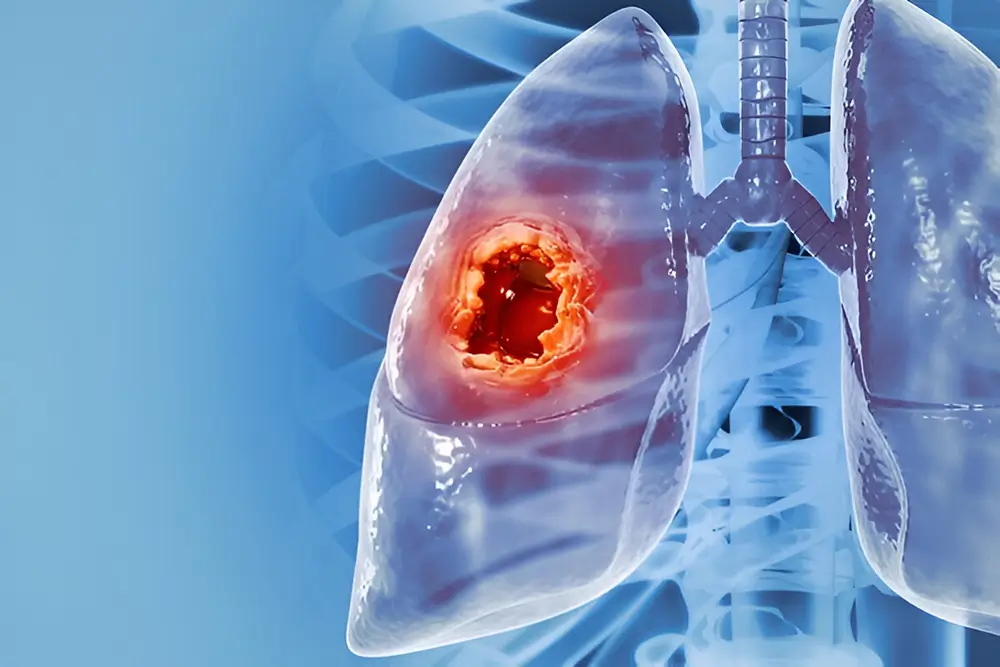
Lung cancer begins when cells in the lungs start growing abnormally and uncontrollably. Over time, these cells can form a tumor, grow into surrounding tissues, and spread to other parts of the body.
Several factors can increase the risk of developing lung cancer, including:
Lung cancer is broadly classified into two main types:
Identifying the type of lung cancer is essential because treatment options differ according to the cancer subtype, stage, and molecular characteristics.
Several factors can increase the risk of developing lung cancer, including:
Because of environmental smoke and air pollution, lung cancer can also occur in people who have never smoked. Genetic factors and certain inherited predispositions may also contribute to lung cancer risk.
Lung cancer may not cause noticeable symptoms in its early stages. When symptoms do occur, they can sometimes resemble common respiratory conditions such as tuberculosis or COPD. This can make early detection difficult.
Common lung cancer symptoms include:
When lung cancer spreads to other organs, symptoms can vary depending on the area affected. Bone involvement may cause bone pain, while brain involvement may cause neurological symptoms, and liver involvement may cause jaundice.
If you experience persistent lung cancer symptoms, consult a qualified healthcare professional for timely evaluation. Coughing up blood or severe breathing difficulty requires prompt medical attention.
A lung cancer diagnosis involves several tests to confirm the presence of cancer, identify its histological subtype, and determine the stage of the disease.
Accurate diagnosis and molecular testing can help a lung cancer specialist in Kolkata select appropriate treatment options.
The diagnostic tests may include:
A chest X-ray is commonly used as an initial imaging test.
A CT scan provides detailed images of the lungs and can help identify lung masses and involvement of lymph nodes.
A PET-CT scan helps assess whether the cancer has spread to other organs.
An MRI of the brain can help determine whether the cancer has involved the brain.
Bronchoscopy allows direct visualization of the airways and can be used to obtain a biopsy when the tumor is located in the bronchus.
A CT-guided needle biopsy can be used for peripheral lung lesions. It can also be performed from the most accessible area when the tumor has spread to another part of the body.
Endobronchial ultrasound (EBUS) can be used to assess lymph nodes in the chest and obtain samples when required.
Histopathology helps confirm whether a tumor is cancerous. Additional IHC studies can be performed to determine the type of lung cancer.
Molecular testing can identify genetic changes such as EGFR, ALK, and ROS1, along with PD-L1 expression levels. These results can be important when considering personalized and targeted treatment.
Pulmonary function testing helps determine how well the underlying normal lung is functioning. It is particularly important when the tumor is localized or locally advanced and before surgery or definitive chemoradiotherapy.
Lung cancer staging helps determine how far the disease has progressed and plays an important role in treatment planning.
Staging for non-small cell lung cancer is based on the AJCC TNM system:
The stages include:
Small cell lung cancer may also be classified as limited-stage or extensive-stage disease, depending on its spread.
Early diagnosis can help identify lung cancer at an earlier stage. Regular screening may also be important for people who meet the criteria for being at high risk.
The appropriate lung cancer treatment in Kolkata depends on several factors, including the type of cancer, stage of disease, molecular profile, and the patient’s overall performance status.
Lung cancer care may involve a multidisciplinary team that includes medical oncologists, radiation oncologists, pulmonologists, surgeons, and radiologists.
Depending on the individual case, treatment may include surgery, radiation therapy, chemotherapy, targeted therapy, or immunotherapy.
Dr. Sandip Ganguly, an experienced lung cancer specialist in Kolkata, focuses on individualized medical oncology treatment and coordinated care based on each patient’s diagnosis.
Lung cancer surgery is best suited for selected patients with early-stage non-small cell lung cancer (NSCLC) and certain locally advanced cases.
The surgical approaches mentioned include:
The choice of surgery depends on the individual patient’s condition and the extent of the disease.
Surgical treatment is planned in consultation with a thoracic surgeon and other members of the multidisciplinary cancer care team.
Radiation therapy may be used for locally advanced lung cancer when surgery is impossible. Stereotactic Body Radiation Therapy (SBRT) may be used for selected localized lung tumours.
For brain metastases, Whole Brain Radiotherapy (WBRT) or Stereotactic Radiosurgery (SRS) may be used. Palliative radiotherapy can also be used to relieve pain caused by metastases.
Radiation therapy may be combined with chemotherapy or other treatments depending on the stage and type of lung cancer.
Chemotherapy is used in different stages of lung cancer. Common chemotherapy drugs include platinum compounds such as cisplatin and carboplatin, which may be used in combination with other medicines such as pemetrexed, paclitaxel, and gemcitabine.
Chemotherapy for lung cancer may be administered before surgery, after surgery, alongside radiation therapy, or as part of treatment for advanced disease. The choice of medicines depends on the lung cancer subtype and the patient’s overall health.
localized lung tumours.
For brain metastases, Whole Brain Radiotherapy (WBRT) or Stereotactic Radiosurgery (SRS) may be used. Palliative radiotherapy can also be used to relieve pain caused by metastases.
Radiation therapy may be combined with chemotherapy or other treatments depending on the stage and type of lung cancer.
Targeted therapy can be considered when specific genetic mutations are identified through molecular testing of a biopsy specimen or liquid biopsy.
Examples include:
These treatments may be available as oral medicines, injections, or infusions, and can be considered when the relevant genetic changes are identified.
Molecular profiling is an important part of personalized lung cancer treatment, particularly for eligible patients with non-small cell lung cancer.
Immunotherapy helps the body's immune system recognize and attack cancer cells.
It may be used in PD-L1-positive or driver-mutation-negative advanced cancers. Depending on the situation, immunotherapy may be used alone or in combination with chemotherapy.
Checkpoint inhibitors used in appropriate lung cancer treatment settings include pembrolizumab, nivolumab, atezolizumab, and tislelizumab.
Immunotherapy may also be recommended before or after surgery, or following chemoradiotherapy, in selected patients. Eligibility depends on cancer type, stage, biomarker results, and previous treatments.
Lung cancer can also affect people who have never smoked. Adenocarcinoma is a common histological type among patients who have never smoked.
Some of these cancers may have EGFR or ALK mutations, making targeted therapy an option. These cancers can behave differently, which is why personalized treatment based on the patient’s condition is important.
Air pollution, secondhand smoke, radon exposure, occupational hazards, and certain genetic factors may contribute to lung cancer risk in non-smokers.
Prevention and early detection are important aspects of lung cancer care.
The preventive measures mentioned include:
Avoiding tobacco exposure is one of the most effective ways to reduce lung cancer risk. However, lung cancer cannot be completely prevented, and individuals with persistent respiratory symptoms should seek medical evaluation.
Lung cancer screening is intended to detect cancer at an earlier stage, even before symptoms appear.
Under commonly used US screening guidelines, annual low-dose CT (LDCT) screening is recommended for eligible high-risk individuals who meet the following criteria:
People who meet these criteria can discuss LDCT screening with their doctor.
Screening recommendations may differ in India and should be individualized based on smoking history, risk factors, and clinical guidance. Low-dose CT screening is for people without symptoms; symptomatic patients require diagnostic evaluation.
A lung cancer diagnosis can affect many aspects of everyday life. With cancer treatment, ongoing care can help patients manage the effects of the disease and treatment.
Long-term care may include:
Supportive and palliative care can also help manage symptoms such as breathlessness, fatigue, pain, and treatment-related discomfort, improving quality of life during lung cancer treatment.
There have been developments in both the diagnosis and treatment of lung cancer, including liquid biopsy, AI-assisted imaging, and newer immunotherapy agents.
Clinical trials can provide access to newer treatment approaches and contribute to the development of future lung cancer care.
Advances in molecular testing, targeted therapies, and immunotherapy have expanded treatment options for eligible patients with non-small cell lung cancer. The choice of treatment depends on individual clinical findings and the availability of approved therapies.
Dr. Sandip Ganguly is an experienced lung cancer specialist in Kolkata who provides care for different types and stages of lung cancer.
His approach focuses on understanding the patient’s diagnosis and developing a treatment plan according to the type and stage of cancer, molecular profile, and individual needs.
As a medical oncologist, he provides personalized treatment planning, including chemotherapy, targeted therapy, immunotherapy, and supportive oncology care, while coordinating with other specialists when required.
Unsure about the right treatment? Schedule a consultation with Dr. Sandip Ganguly today, an experienced lung cancer doctor in Kolkata, for personalized treatment planning, guidance on diagnosis, chemotherapy, targeted therapy, and immunotherapy.

Seasoned Oncologist , Lung cancer specialist in Kolkata with 15+ years of cancer care experience.
Life expectancy depends on cancer type and stage. Other important factors include the patient's age, overall health, molecular profile, response to treatment, and access to appropriate therapies.
Patients diagnosed early often have better outcomes than those diagnosed with advanced disease. However, survival statistics represent averages across groups and cannot predict how long an individual patient will live. Newer targeted therapies and immunotherapies have also improved outcomes for certain patients.
Yes, many people live close to normal lives after lung cancer, especially with early detection and effective treatment. Modern therapies such as surgery, targeted therapy, and immunotherapy have greatly improved both survival rates and quality of life for selected patients.
Long-term follow-up, rehabilitation, and management of treatment-related side effects are important parts of recovery and survivorship care.
Lung cancer cannot be fully prevented, but risk can be reduced significantly. Avoid smoking, quit if you smoke, stay away from secondhand smoke, reduce radon exposure, and limit occupational hazards like asbestos. Healthy diet and exercise help overall health, but no vitamin or supplement is proven to prevent lung cancer.
Eligible high-risk individuals should also discuss low-dose CT screening with their healthcare professional.
The best treatment depends on cancer type, stage, and patient profile. For early-stage non-small cell lung cancer, surgery or radiation therapy may be appropriate. Locally advanced disease may require chemotherapy, radiotherapy, immunotherapy, or combinations of these treatments.
For advanced lung cancer, targeted therapy may be recommended when actionable genetic mutations are present. Immunotherapy, chemotherapy, or combination treatments may be considered based on molecular testing, PD-L1 expression, and the patient's condition.
A lung cancer specialist in Kolkata can help patients understand the most appropriate treatment options based on their diagnosis.