
Every day, people across India dismiss a nagging discomfort in the chest while eating, a stubborn case of “acidity,” or unexplained weight loss as something trivial. But these are often the very first warning signals that cancer of the esophagus is quietly developing inside the body. The tragedy of esophageal cancer is not just how serious it is, it is how silently it begins.
Understanding the esophagus cancer symptoms at the earliest possible stage can be the difference between successful treatment and a late, difficult diagnosis. This post breaks down the signs you should never ignore, who is most at risk, and why seeing a doctor who specializes in the treatment of cancer as early as possible matters so much.
What Are the Early Symptoms of Esophagus Cancer That Most People Miss?
The early symptoms of esophagus cancer are so subtle that most people dismiss them as routine digestive complaints. Cancer of the esophagus — the muscular tube connecting your throat to your stomach — typically produces no noticeable warning signs in its earliest stages. By the time symptoms of esophagus cancer become obvious, the disease has often advanced to a stage where treatment is more difficult. This is why understanding the quiet, easy-to-ignore signals matters so much for early intervention and better survival outcomes.
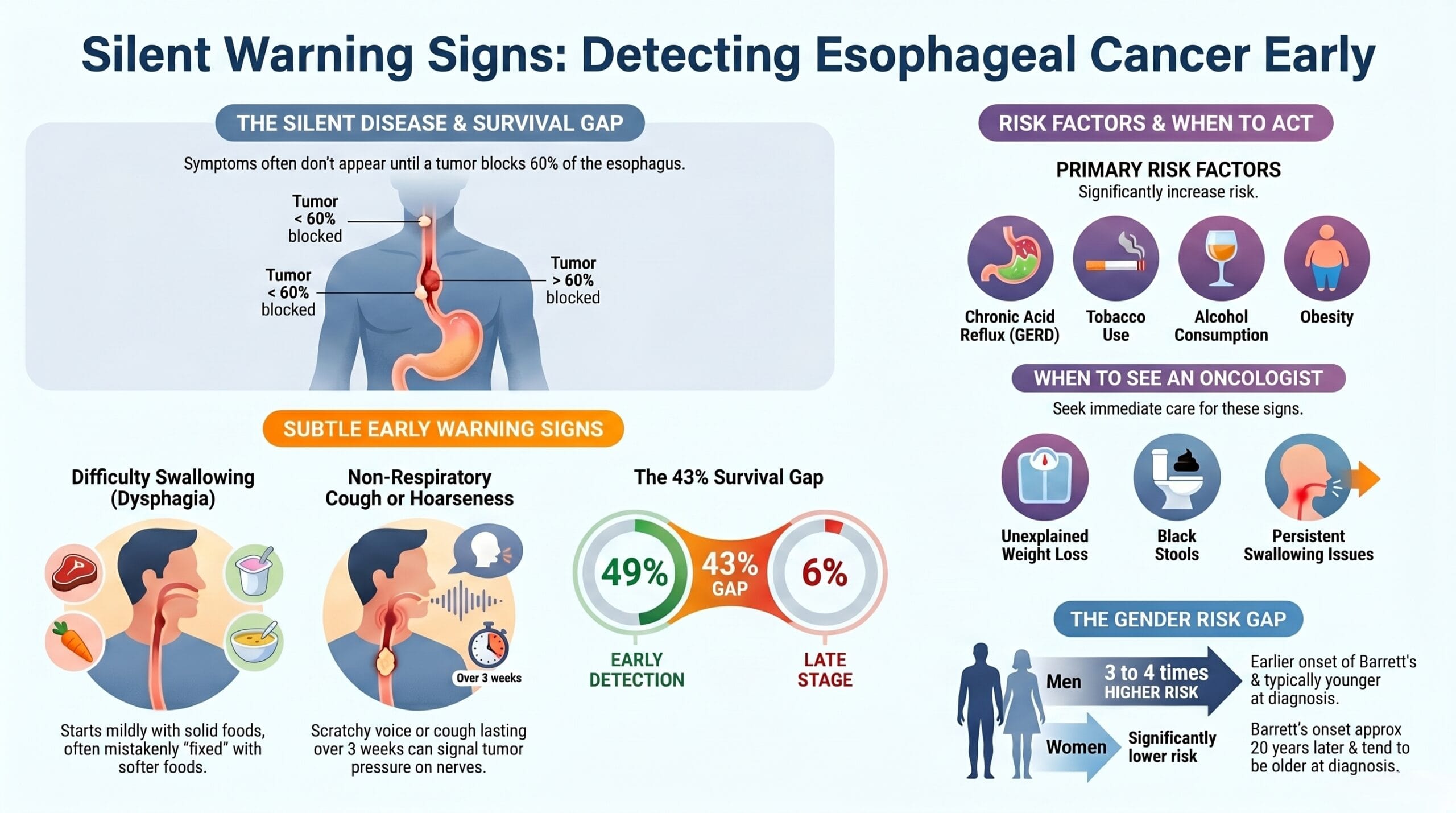
According to the American Cancer Society, the 5-year survival rate for esophageal cancer when caught at a localized stage is approximately 49%, compared to just 6% when it has spread to distant organs, making early awareness of esophagus cancer symptoms critical.
If you notice any of the signs described in this post, consult a doctor who specializes in the treatment of cancer without delay.
Why Does Esophageal Cancer Go Undetected for So Long in Most Patients?
Prominent symptoms usually do not appear until the cancer has infiltrated over 60% of the circumference of the esophageal tube, by which time the tumor is already in an advanced stage. This is the core reason cancer of the esophagus is so dangerous. The esophagus is a flexible, elastic organ, so it accommodates a growing tumor for a long time before the narrowing becomes severe enough to cause discomfort. Most people only seek help when swallowing becomes noticeably difficult, which by then usually signals an advanced disease.
When swallowing becomes harder, people often change their diet and eating habits without realizing it. They take smaller bites and chew their food more carefully and slowly. People then might start eating softer foods that can pass through the esophagus more easily. These unconscious dietary adaptations delay a diagnosis further, which is why understanding the silent signs of esophagus cancer symptoms is genuinely life-saving knowledge.
What Are the Silent Signs of Esophagus Cancer You Should Never Ignore?
The following are the warning signs that are frequently overlooked or misattributed to benign conditions.
Persistent Heartburn or Acid Reflux That Will Not Settle
Most people experience heartburn occasionally, but heartburn that is new, worsening, or does not respond to antacids deserves medical evaluation. As esophageal cancer grows, it can cause uncomfortable physical sensations including acid reflux, chest pain, pressure, or burning that are often mistaken for heartburn. Chronic acid reflux can also lead to Barrett’s esophagus, a condition that significantly raises the risk of developing cancer of the esophagus. Do not ignore recurring heartburn as a merely normal problem.
Difficulty Swallowing That Seems to Come and Go
The most common symptom of esophageal cancer is having trouble swallowing, also called dysphagia. It can feel like food is stuck in the throat or chest, and it might even cause someone to choke or vomit. What makes this sign particularly deceptive is that it starts mildly and only affects solid foods at first. People switch to softer foods instinctively and believe the problem has been resolved, when in fact the underlying cause continues to grow. If left unattended , people face difficulty while swallowing liquids also. Unfortunately most patients present to hospital at this stage.
Unexplained Weight Loss Without Any Dietary Change
Losing weight without trying is one of the most important red flags in esophagus cancer symptoms. Reduced caloric intake caused by difficulty eating, combined with the metabolic demands of a growing tumor, leads to significant weight loss. This symptom is often mistakenly attributed to stress, aging, or a recent stomach upset. If you have lost noticeable weight over a few weeks without a clear reason, consult a medical oncologist in Kolkata promptly.
Hoarseness or a Voice That Has Changed Without Reason
A scratchy or weak voice that has lasted more than two to three weeks without a respiratory cause is a warning sign of esophagus cancer symptoms. When the esophageal tumor grows large enough or spreads to nearby structures, it can affect the nerve responsible for vocal cord control. Many people attribute this to seasonal changes or a lingering cold and delay seeking care.
A Persistent Cough With No Clear Respiratory Cause
A chronic cough that is not linked to a cold, allergy, or asthma is another overlooked esophagus cancer symptom. As the tumor presses on the airway or causes irritation from refluxed material entering the lungs, a persistent cough develops. Many patients in this situation are treated for respiratory conditions for months before cancer of the esophagus is considered. Signs of esophageal cancer can include constant coughing and hiccups alongside trouble swallowing and hoarseness.
Chest Pain or Discomfort Behind the Breastbone
Chest pain in esophageal cancer is typically felt above the stomach, sometimes between the shoulder blades or in the back, and swallowing or indigestion may make the pain sharper. This symptom is frequently dismissed as musculoskeletal or cardiac in origin, delaying a correct diagnosis. If chest discomfort worsens when you eat or swallow, it warrants urgent investigation.
Dark or Black Stools and Unexplained Fatigue
Bleeding into the esophagus causes stool to turn black and produces a low red blood cell count, otherwise known as anemia. Fatigue and weakness that accompany this symptom are often blamed on overwork or poor diet rather than internal blood loss. Black, tarry stools are a medical emergency signal that should never be ignored and must be investigated immediately.
Feeling Full Very Quickly After Eating Small Amounts
Early satiety, or feeling full after just a few bites, is another sign that is routinely attributed to digestive issues or stress. When combined with any other symptom on this list, especially difficulty swallowing or weight loss, it must be investigated by a doctor who specializes in the treatment of cancer without delay.
How Are the Symptoms of Esophagus Cancer Different in Men and Women?
The symptoms of esophagus cancer in men and women are broadly similar, but there are important differences that affect how each group is affected.
Factor | Men | Women |
Overall risk | 3 to 4 times higher risk than women | Significantly lower lifetime risk |
Age at diagnosis | Typically earlier | Tend to present at older ages |
| Barrett’s esophagus onset | Earlir in life | Appears approximately 20 years later than in men |
Regarding symptoms of esophagus cancer in men, the dominant pattern involves difficulty swallowing and significant weight loss appearing in men over 55, typically linked to a history of smoking, alcohol use, or chronic acid reflux. Men are three times more likely than women to develop esophageal cancer, making regular screening essential for high-risk males.
Regarding symptoms of esophagus cancer in women, the presentation often involves additional complaints beyond dysphagia. Barrett’s esophagus appears approximately 20 years later in women than in men, possibly due to hormonal factors. Women may also attribute their symptoms such as nausea, bloating, and fatigue to hormonal causes or gastrointestinal disorders, which can further delay a correct diagnosis.
Both men and women benefit equally from cancer screening and early detection when risk factors are present. Learn more about cancer screening and early detection and how it can make a decisive difference in outcomes.
What Are the Risk Factors That Make Esophagus Cancer Symptoms More Likely to Develop?
Understanding your risk is just as important as knowing your symptoms. The following factors increase the likelihood that you will develop cancer of the esophagus.
- Chronic acid reflux or GERD — Long-term acid damage to the esophageal lining is among the strongest risk factors, particularly for adenocarcinoma.
- Barrett’s esophagus — A direct precancerous consequence of uncontrolled GERD.
- Tobacco use — Smoking accounts for a large proportion of squamous cell esophageal cancers.
- Alcohol consumption — Heavy alcohol use raises the risk substantially, and the combination of tobacco and alcohol multiplies it.
- Obesity — Excess body weight increases pressure on the stomach and promotes acid reflux.
- Age over 55 — Esophageal cancer mainly affects people aged 60 and older.
- Diet low in fruits and vegetables — A diet lacking essential nutrients raises cellular vulnerability.
- HPV infection — Particularly linked to squamous cell carcinoma of the esophagus.
If you have multiple risk factors, understanding cancer genetic counseling can help you make informed decisions about monitoring and prevention.
When Should You See a Doctor Who Specializes in the Treatment of Cancer?
You should see a doctor who specializes in the treatment of cancer, specifically a medical oncologist, if you experience any of the following situations.
- Difficulty swallowing that has persisted for more than two weeks
- Unexplained weight loss of more than 5% of your body weight within two months
- Persistent hoarseness or a chronic cough without a clear respiratory cause
- Chest pain or discomfort that worsens with eating or swallowing
- New or worsening heartburn that does not respond to antacid medication
- Black or tarry stools combined with fatigue
According to the World Health Organization, esophageal cancer is among the ten most common causes of cancer death globally, with outcomes strongly tied to the stage at which it is first detected.
Do not wait for symptoms to become severe. Early evaluation by an oncologist dramatically improves treatment options and outcomes.
What Happens If Esophagus Cancer Symptoms Are Ignored for Too Long?
Esophageal cancer tends to be asymptomatic until it has reached an advanced stage. As the tumor grows, it blocks or narrows the esophagus, making it difficult for food and liquids to pass through and leading to malnutrition, dehydration, and weight loss. As the disease progresses, it can spread to nearby lymph nodes and then to distant organs including the lungs and liver.
The consequences of delayed diagnosis include severely limited surgical options, greater reliance on palliative treatments to manage symptoms rather than cure, substantially lower survival rates, and increased complexity of systemic treatment. According to the National Cancer Institute, because esophageal cancer often has no symptoms in the early stages, it is usually detected at a more advanced stage, making it considerably more challenging to treat.
This is why understanding esophagus cancer symptoms, especially the silent ones, and acting on them early is the most important step you can take for your long-term health.
Who Is the Best Doctor for Esophagus Cancer in Kolkata?
The best doctor for esophagus cancer in Kolkata is one who combines subspecialty expertise in oncology with experience managing complex gastrointestinal malignancies. Dr. Sandip Ganguly, a Consultant Medical Oncologist at Apollo Cancer Hospital Kolkata with over 14 years of experience, is widely regarded as among the best doctors for esophagus cancer in Kolkata. Having trained at Kidwai Memorial Institute of Oncology and spent eight years at Tata Medical Centre Kolkata, Dr. Ganguly has managed a wide range of cancer types and treatment modalities.
He offers comprehensive evaluation and management for patients presenting with esophagus cancer symptoms, including access to chemotherapy, immunotherapy, and targeted therapy protocols. For patients concerned about a potential diagnosis, or those who have already received one, an early consultation can define the most appropriate and personalized treatment pathway.
To book an appointment with Dr. Sandip Ganguly, call 99039 74739.