

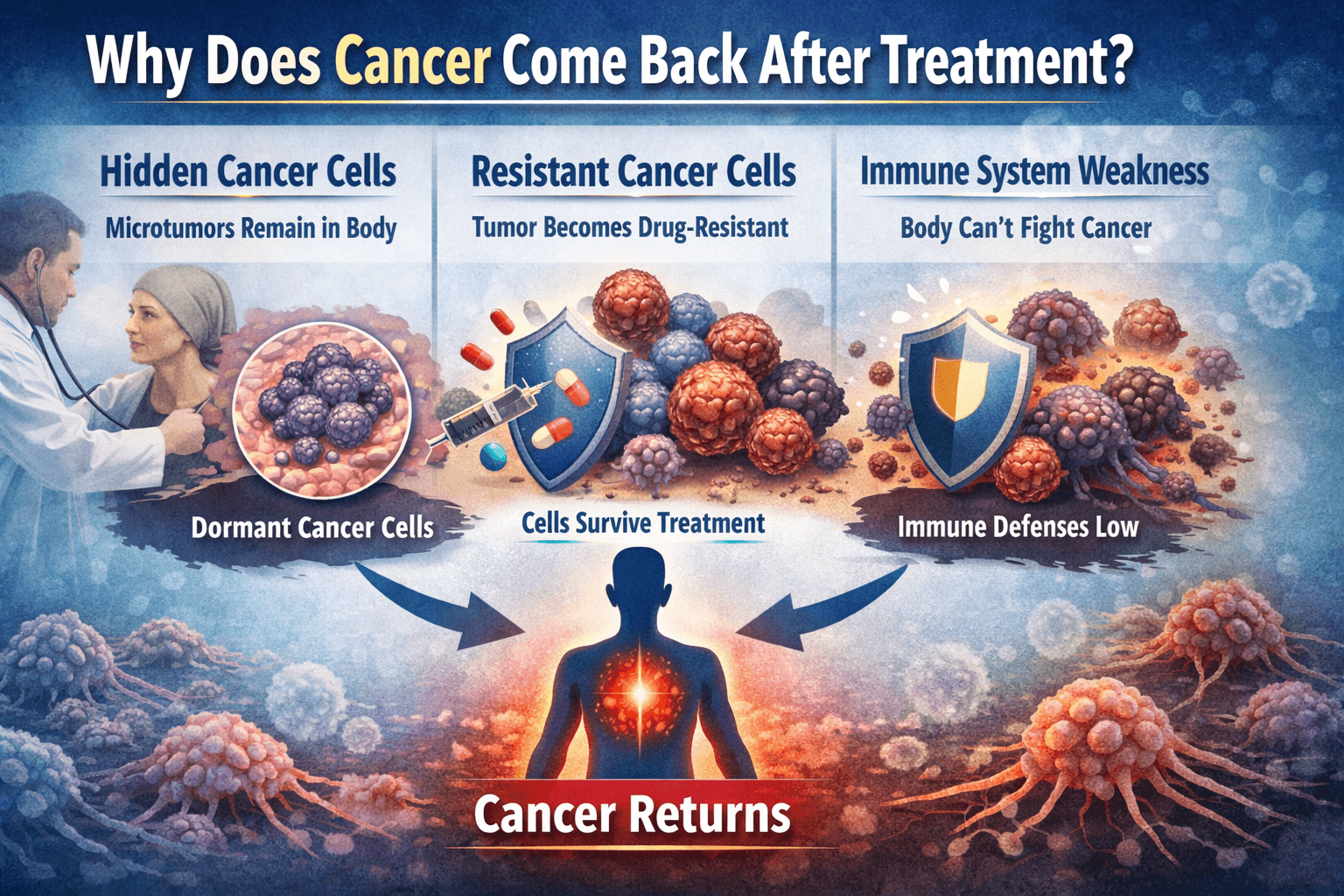
One of the most heartbreaking questions oncologist face comes from patients who have successfully completed their treatment but later face a relapse. A common scenario involves a patient who, for example, completed breast cancer treatment in 2022, only to find that the disease has unfortunately returned recently.
Dr. Sandip Ganguly, Consultant Medical Oncologist at Apollo Cancer Hospital, Kolkata, explains the science behind why this happens and what patients can do about it.
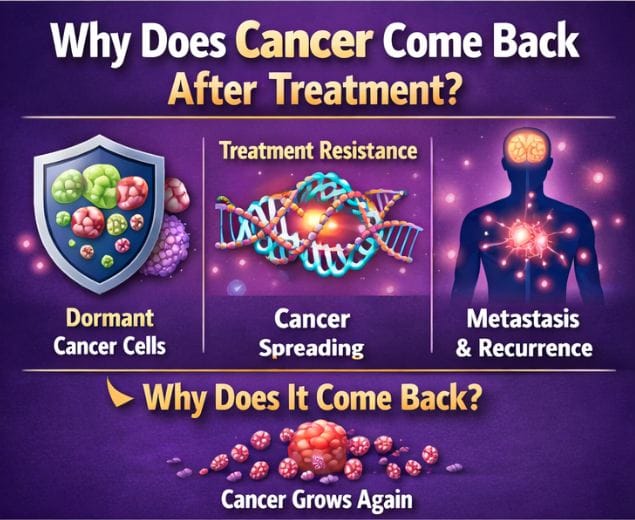
Why does cancer return?
Cancer often returns because microscopic cells, known as micrometastases, may remain in the blood circulation even after the main tumor is removed. Additionally, Cancer Stem Cells—the root of the disease—can hide in deep tissues like the bone marrow, evading initial treatment. Cancer is always a systemic disease because of presence of micrometastases in the blood circulation.
The Hidden Nature of Cancer
When we think of cancer, we often think of a localized lump in a specific organ, such as the breast, lung, stomach, or colon. However, Dr. Sandip Ganguly warns that cancer is rarely just a local issue and it is a systemic disease.
- Micrometastasis: Cancer cells often travel through blood circulation pathways. These tiny traces of cancer are called micrometastases.
- Cancer Stem Cells: These are the “roots” from which the cancer originates. Crucially, these stem cells may not stay in the organ where the cancer started; they often hide deep within the body, such as in the bone marrow.
Why Didn’t Chemotherapy Kill All the Cells?
Doctors use chemotherapy—either before or after surgery—specifically to hunt down these wandering cancer cells and hidden stem cells. However, the success of chemotherapy in preventing a relapse depends heavily on the stage of the disease.
Early-Stage Cancer
In early-stage patients, the number of cancer stem cells or micrometastases is usually very low. Chemotherapy can easily destroy this small number, preventing the disease from returning.
Advanced-Stage Cancer (e.g., Stage 3)
Patients diagnosed at an advanced stage typically have a much higher volume of micrometastases. Dr. Ganguly notes that in these cases, despite administering chemotherapy, the disease has a higher tendency to return because the treatment may not be able to eliminate such a large volume of microscopic cells completely.
FAQ: Protecting Yourself Against Recurrence
Q: Is there any way to catch recurrence early?
A: Yes. Dr. Ganguly emphasizes the importance of strict regular follow-ups. Patients must perform prescribed blood tests, regular physical examinations and CT scans as advised. These tests allow doctors to detect if the cancer is returning at the earliest possible stage.
Q: Is the medical community making progress?
A: Absolutely. Due to advanced treatments available today, the tendency for cancer to return has dropped significantly. Dr. Ganguly remains hopeful that future advancements will allow for a complete cure for all patients.
Disclaimer:This blog is based on general medical insights from Dr. Sandip Ganguly. Always consult your oncologist for personal medical advice.