

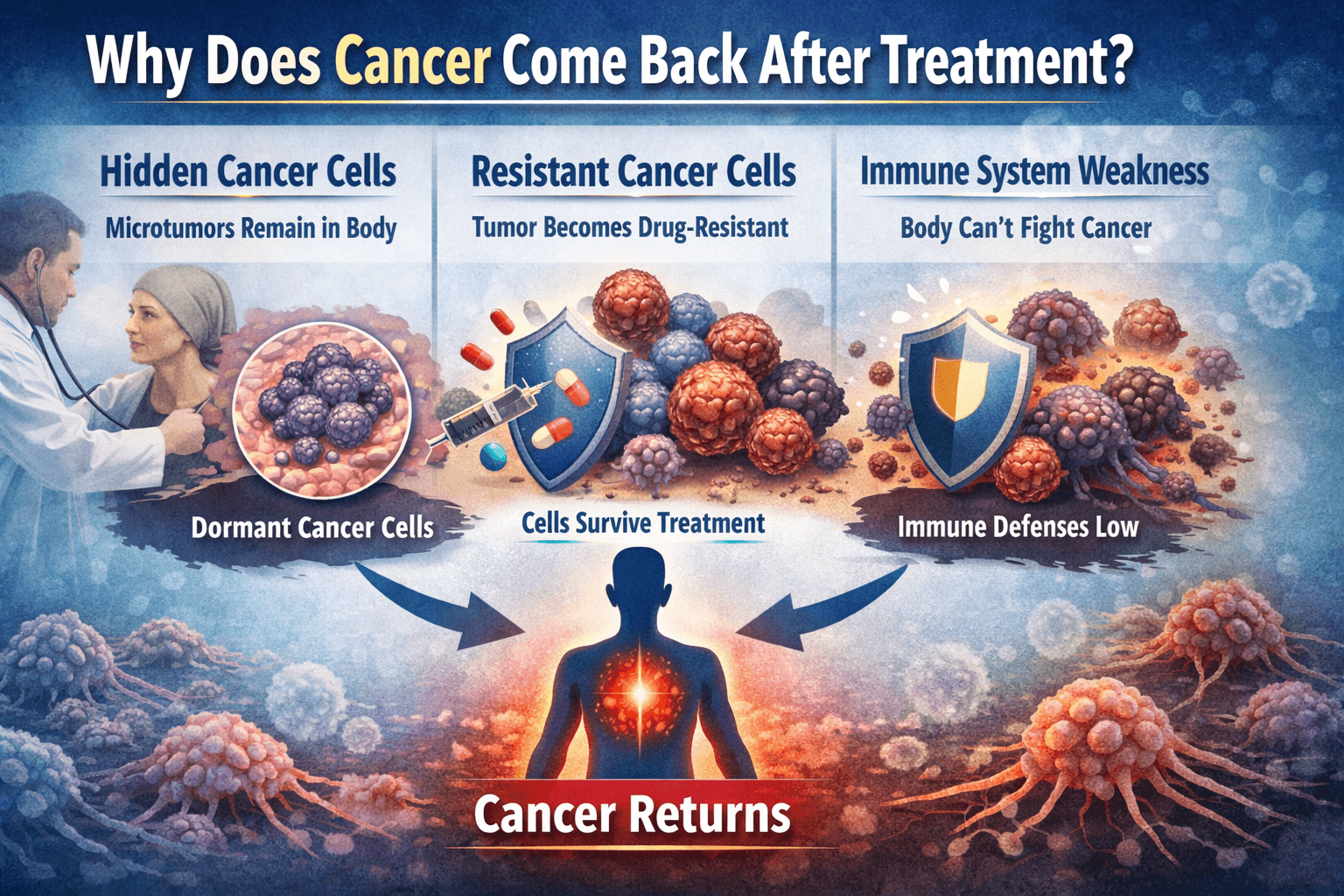
Why Cancer Come Back After Treatment is one of the most heartbreaking concerns oncologists hear from patients who have successfully completed their treatment but later experience a relapse. A common situation involves a patient who, for example, completed breast cancer treatment in 2022, only to discover that the disease has unfortunately returned recently.
Dr. Sandip Ganguly, Consultant Medical Oncologist at Apollo Cancer Hospital, Kolkata, explains the science behind why this happens and what patients can do about it.
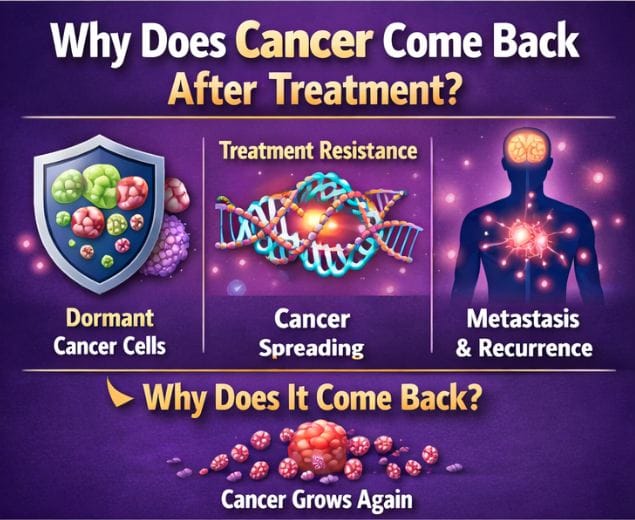
Why does cancer come back after treatment?
Cancer often returns because microscopic cells, known as micrometastases, may remain in the blood circulation even after the main tumor is removed. Additionally, Cancer Stem Cells—the root of the disease—can hide in deep tissues like the bone marrow, evading initial treatment. Cancer is always a systemic disease because of presence of micrometastases in the blood circulation.
Cancer recurrence can occur in different ways. It may return at or near the original site (local recurrence), in nearby lymph nodes or tissues (regional recurrence), or in another part of the body (distant recurrence or metastasis).
Several biological factors may contribute to recurrence, including:
- Microscopic residual cancer cells: Tiny numbers of cancer cells may remain after surgery, chemotherapy, radiation therapy, or other treatments. These cells may be too small in number to appear on routine scans or tests.
- Micrometastases: Cancer cells can sometimes spread from the original tumor through the blood or lymphatic system before the primary cancer is diagnosed or treated. These microscopic deposits may remain undetected and potentially grow later.
- Dormant cancer cells: Some cancer cells can enter a relatively inactive state and remain dormant for months or even years. In certain circumstances, these cells may become active again.
- Treatment-resistant cells: Cancer cells are not always identical. Some cells within a tumor may have biological characteristics that make them less sensitive or resistant to a particular treatment, allowing them to survive and potentially multiply later.
- Cancer stem-like cells: Research suggests that some tumors contain cells with stem-like properties that may have the ability to self-renew and contribute to tumor growth, treatment resistance, and recurrence. However, the role of these cells varies between cancer types and remains an active area of research.
- Cancer biology and tumor characteristics: The stage, type, grade, molecular characteristics, growth pattern, and response to initial treatment can all influence the likelihood of recurrence.
For this reason, completing the recommended treatment and maintaining appropriate follow-up after treatment are important parts of cancer care. Regular monitoring allows doctors to assess treatment response, manage side effects, and investigate new symptoms when necessary.
The Hidden Nature of Cancer
When we think of cancer, we often think of a localized lump in a specific organ, such as the breast, lung, stomach, or colon. However, Dr. Sandip Ganguly warns that cancer is rarely just a local issue and it is a systemic disease.
- Micrometastasis: Cancer cells often travel through blood circulation pathways. These tiny traces of cancer are called micrometastases.
- Cancer Stem Cells: These are the “roots” from which the cancer originates. Crucially, these stem cells may not stay in the organ where the cancer started; they often hide deep within the body, such as in the bone marrow.
Why Didn’t Chemotherapy Kill All the Cells?
Doctors use chemotherapy either before or after surgery specifically to hunt down these wandering cancer cells and hidden stem cells. However, the success of chemotherapy in preventing a relapse depends heavily on the stage of the disease.
Early-Stage Cancer
In early-stage patients, the number of cancer stem cells or micrometastases is usually very low. Chemotherapy can easily destroy this small number, preventing the disease from returning.
Advanced-Stage Cancer (e.g., Stage 3)
Patients diagnosed at an advanced stage typically have a much higher volume of micrometastases. Dr. Ganguly notes that in these cases, despite administering chemotherapy, the disease has a higher tendency to return because the treatment may not be able to eliminate such a large volume of microscopic cells completely.
FAQ: Protecting Yourself Against Recurrence
Q: Is there any way to catch recurrence early?
A: Yes. Dr. Ganguly emphasizes the importance of strict regular follow-ups. Patients must perform prescribed blood tests, regular physical examinations and CT scans as advised. These tests allow doctors to detect if the cancer is returning at the earliest possible stage.
Q: Is the medical community making progress?
A: Absolutely. Due to advanced treatments available today, the tendency for cancer to return has dropped significantly. Dr. Ganguly remains hopeful that future advancements will allow for a complete cure for all patients.
Disclaimer:This blog is based on general medical insights from Dr. Sandip Ganguly. Always consult your oncologist for personal medical advice.