
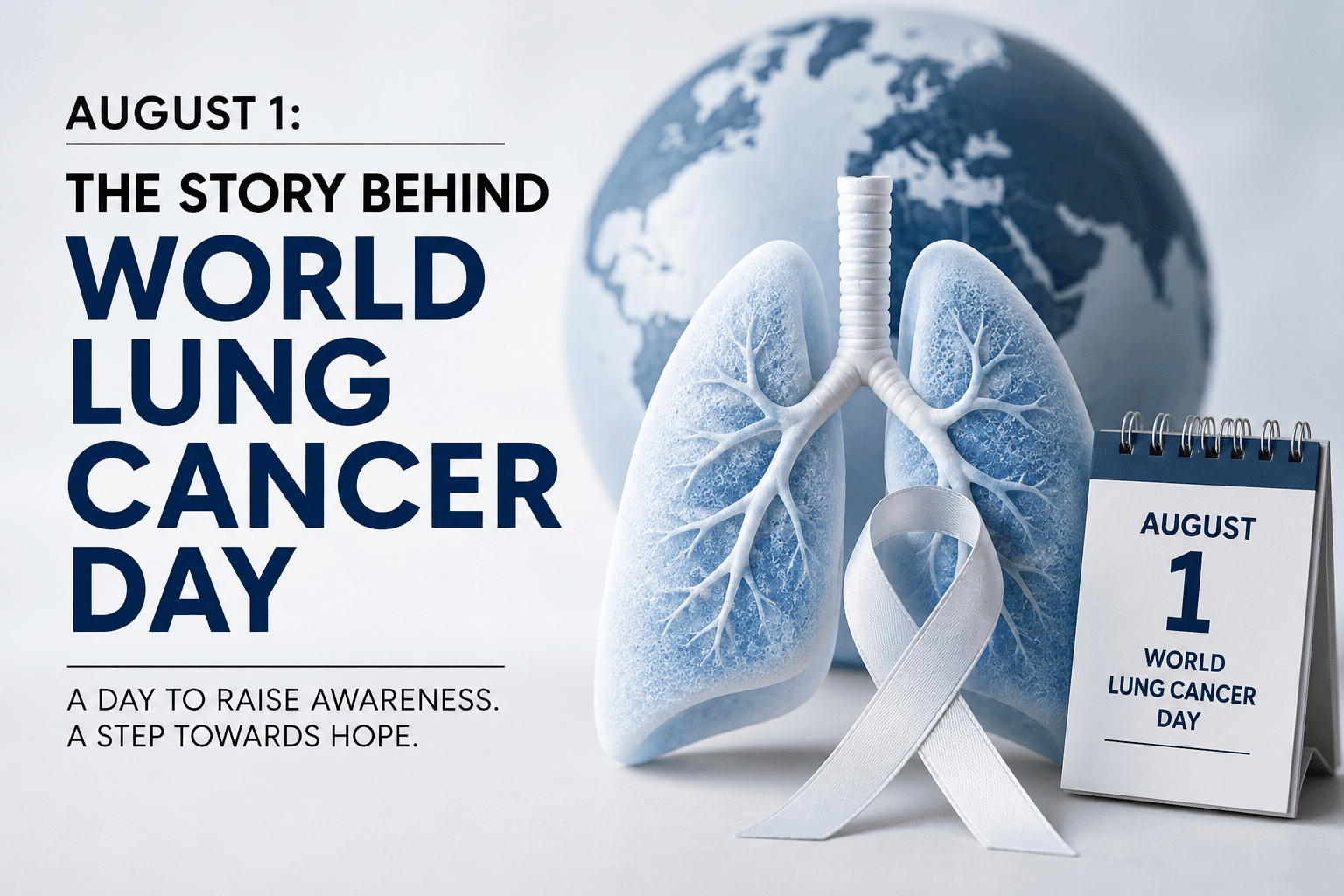
Every year on August 1, the world observes World Lung Cancer Day. It’s a day set aside to talk openly about one of the most common and deadliest cancers there is. The Forum of International Respiratory Societies (FIRS) started this observance back in 2012, along with a group of other lung health organisations, with a simple goal: get people talking about prevention, catch the disease earlier, and improve access to treatment.
The idea behind the day is to stand together through the disease. That means supporting patients, caregivers, and the doctors and nurses who treat them, while also pushing for wider access to screening.
Why This August 1 World Lung Cancer Day Matters More in India
Around the world, the World Health Organisation (WHO) estimates lung cancer caused close to 1.8 million deaths in 2022, making it the leading cause of cancer death globally. In India, the numbers tell an even more urgent story.
According to India’s National Cancer Registry Programme, lung cancer is already the most common cancer among Indian men, and case numbers have been climbing fast. Researchers project over 81,000 cases in men and around 30,000 in women by 2025, up sharply from just a decade earlier. Add it up and that’s over 1.6 lakh new cases a year, alongside roughly 60,000 deaths annually.
What makes this harder to accept is how late most people find out. Studies show that close to 60 percent of Indian patients are diagnosed only after the cancer has already spread to other parts of the body, and as many as 75 to 85 percent are picked up at stage 3 or 4. Indians also tend to get diagnosed in their mid-50s, roughly a decade earlier than patients in western countries. Some regions stand out even more, with Aizawl in Mizoram recording the highest incidence rates in the country for both men and women.
Behind these numbers are two big drivers: India’s nearly 100 million adult smokers, and rising air pollution in cities. Together they explain why catching the warning signs early matters so much here.
It’s Not Just a Smoker’s Disease
Smoking is still the biggest risk factor by far, but a surprising number of new patients have never smoked in their life. A few other things that raise the risk include:
- Secondhand smoke
- Long term exposure to air pollution
- Occupational exposure to substances like asbestos
- Radon gas
Given how bad air quality has become in many Indian cities, it’s worth remembering that lung cancer isn’t only a smoker’s problem.
Know the Warning Signs
A few symptoms that people tend to ignore for far too long:
- A cough that won’t go away or keeps getting worse
- Getting breathless or wheezy more easily than before
- Chest pain that doesn’t have an obvious cause
- Coughing up blood
- Sudden hoarsenss of breakdown of voice
- Losing weight or feeling unusually tired without trying
- Chest infections that keep coming back
If any of these stick around for more than a couple of weeks, it’s better to get it looked at than to wait and see.
Screening and Early Detection Save Lives
A blood test alone can’t tell you if you have lung cancer. For people at higher risk, such as long term smokers or those exposed to harmful substances at work, doctors recommend a low dose CT scan, followed by imaging and a biopsy if anything looks suspicious. Caught early, lung cancer is far more treatable today than it used to be, thanks to progress in surgery, targeted therapy, and immunotherapy.
The Takeaway
World Lung Cancer Day is a good reminder that awareness and honest conversations about risk can genuinely change outcomes. If you or someone close to you has had a persistent cough, breathlessness, or any of the symptoms above, don’t just wait for it to pass. A visit to the doctor today could make a real difference down the line.