

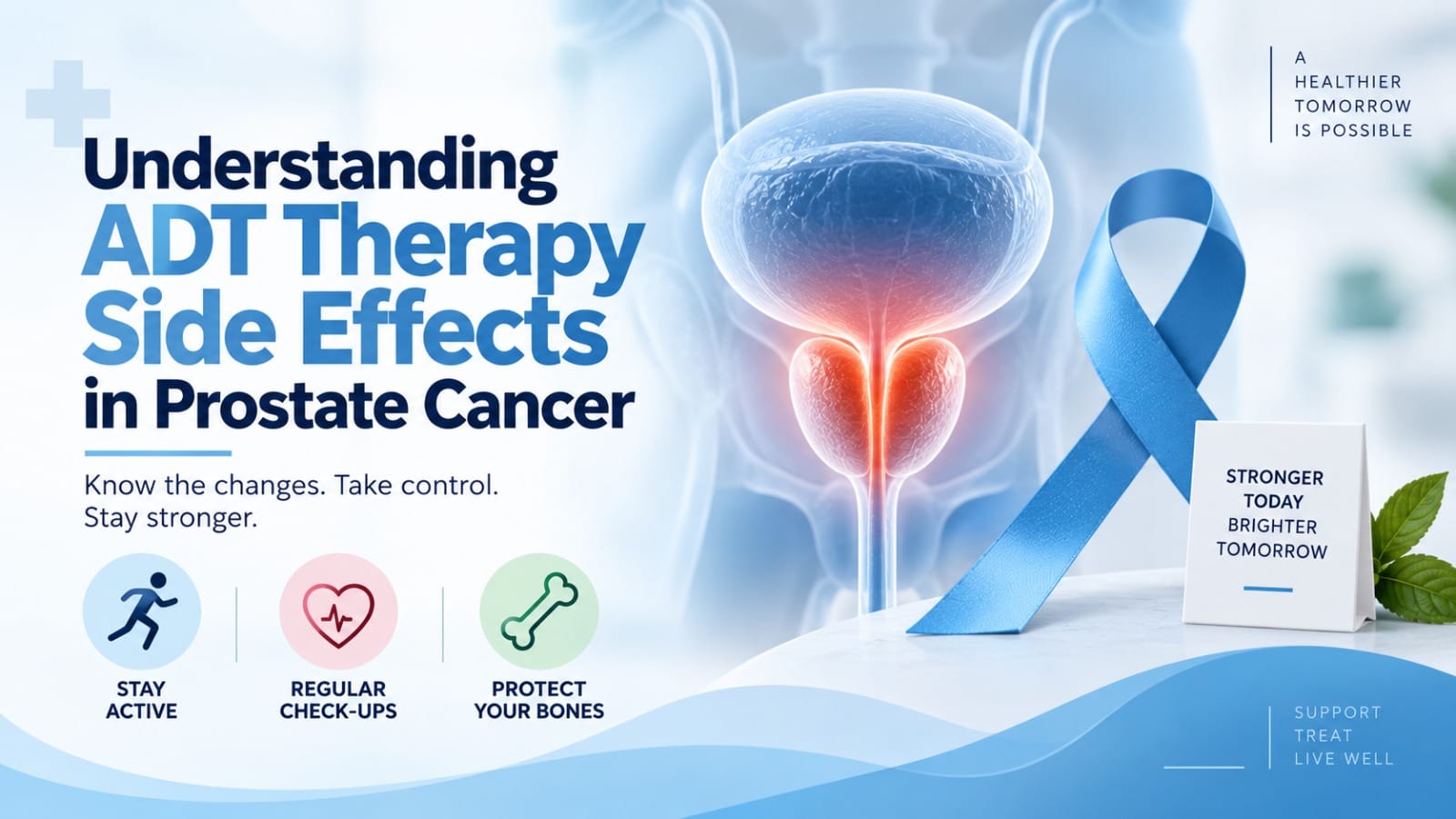
If you or someone you care about is starting androgen deprivation therapy for prostate cancer, knowing what to expect can make the treatment journey easier to manage. Androgen Deprivation Therapy (ADT) is a common and essential treatment that works by lowering testosterone levels to keep cancer under control. Since testosterone plays an important role in everyday health, lowering its levels can cause hormone therapy side effects in prostate cancer. These can range from hot flashes and tiredness to longer-term changes such as bone loss and elevated cholesterol.
The good news is that you don’t have to simply live with these changes. Simple steps, such as 30 minutes of physical exercise, 5 days a week, regular checkups, and taking care of your bone health, can make a big difference in managing ADT therapy side effects.
Common ADT Therapy Side Effects
Lowering testosterone can cause changes in how your body feels from day to day:
- Hot Flashes: You may suddenly feel hot and start sweating, even when sitting in a cool, air-conditioned room.
- Loss of Muscle Mass & Weakness: As testosterone levels drop, you may notice a loss in muscle strength and tone.
- Fatigue and Weight Gain: You may feel continuously drained, sluggish, or notice extra weight around your stomach.
- Reduced Libido: You may notice a drop in sexual desire.
- Mood Shifts: You may experience sudden mood swings, low energy, or feelings of depression.
Long-Term Effects of ADT Therapy
Over time, low testosterone can affect your bones and metabolism, increasing the risk of osteoporosis and metabolic syndrome.
- Metabolic Syndrome and Heart Health: Gaining abdominal fat changes how your body handles food, which can trigger new-onset diabetes and high cholesterol. Over time, this can increase the long-term risk of coronary heart disease or heart attacks.
- Bone Loss and Osteoporosis: Testosterone helps keep your skeleton strong. Lowering testosterone can lead to bone loss and osteoporosis, making bones fragile and increasing the risk of fractures, even from small bumps or falls.
Knowing these possible changes can help you better understand ADT Therapy Side Effects in Prostate Cancer and how to manage them.
How to Manage ADT Therapy Side Effects
Managing ADT therapy side effects in prostate cancer comes down to three simple and practical steps:
- Get moving every day: Aim for 30 minutes of physical exercise, 5 days a week. Regular exercise helps maintain muscle strength, reduce daily fatigue, improve your mood, keep extra weight off, and protect against osteoporosis.
- Keep up with regular health checks: Regular monitoring and blood tests help keep track of your blood sugar and cholesterol levels. This makes it easier to identify signs of new-onset diabetes or rising cholesterol early.
- Protect your bones: Get a DEXA scan to check your bone density. If there are signs of bone loss, taking calcium tablets or prescribed bone-strengthening medications can help protect you from fracture risk.
Understanding these steps can make ADT Therapy Side Effects in Prostate Cancer easier to manage as you continue your treatment.
How ADT Therapy Works
Prostate cancer cells rely on testosterone to grow and spread. Androgen Deprivation Therapy (ADT) works by lowering the amount of testosterone your body produces. Without testosterone to feed on, the cancer cells shrink and stay controlled.
Testosterone also helps maintain your muscles, bones, heart, and mood. Lowering testosterone is what triggers these physical side effects. Taking care of your body through exercise and regular health monitoring can help you get the benefits of cancer control while staying strong.
Frequently Asked Questions
- How does ADT treat prostate cancer?
Prostate cancer cells need testosterone to grow. ADT lowers testosterone levels in your body, which can cause the cancer cells to shrink and stay under control. - Why does lowering testosterone cause side effects?
Testosterone doesn’t just affect cancer cells. It also helps maintain your muscles, bones, heart, and energy levels. When testosterone levels are lowered, it can affect these areas of the body and cause side effects. - What short-term side effects might I feel first?
You might notice hot flashes, muscle weakness, constant tiredness, extra weight around your stomach, a drop in sex drive, or sudden mood changes. - What long-term health risks should I watch out for?
Keeping testosterone levels low over time can lead to bone loss (osteoporosis), which can make fractures more likely. It can also cause metabolic changes, such as higher blood sugar and elevated cholesterol, along with a higher risk of heart disease. - What are the best ways to manage these side effects?
- Get moving: Exercise for 30 minutes a day, 5 days a week, to stay strong and fight off fatigue.
- Get blood work: Keep up with regular health checks to monitor blood sugar and cholesterol changes.
- Protect your bones: Get a DEXA scan to check your bone density and ask about calcium or bone-strengthening medications.
Comments are closed