
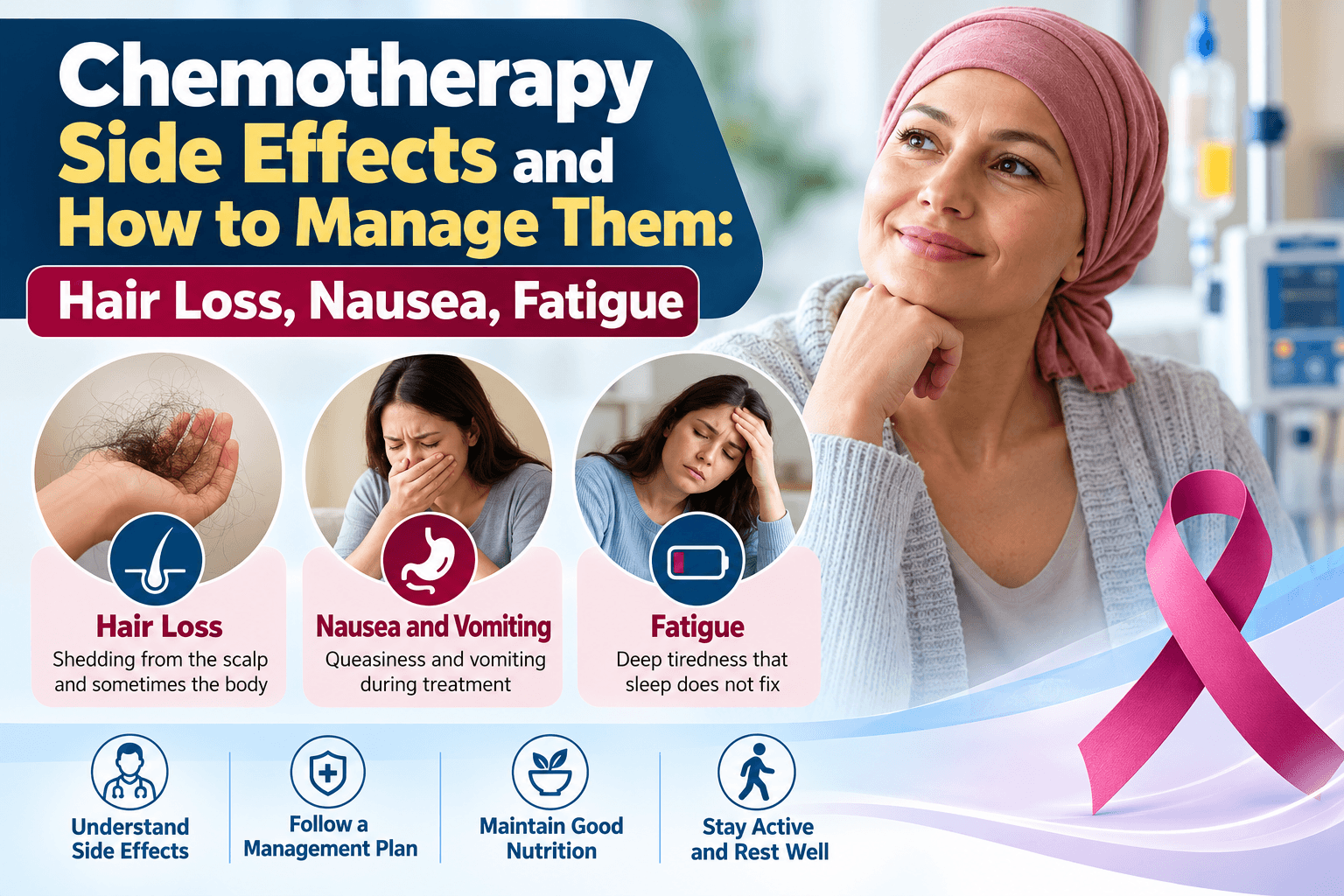
Chemotherapy is one of the most widely used options for cancer treatment in Kolkata, and it works by attacking fast dividing cells. Because chemotherapy also affects healthy cells, many patients notice hair loss, nausea, and fatigue. Most chemotherapy effects are temporary, and most can be reduced with a clear plan. Dr. Sandip Ganguly, widely regarded as a best oncologist in Kolkata with over 14 years of experience in cancer care, explains what to expect and what helps.
What Is Chemotherapy and How Do Chemotherapy Drugs Work Against Cancer Cells?
Chemotherapy is a cancer treatment that uses medicines to kill cancer cells or slow the growth of cancer cells. Chemotherapy drugs work by attacking cells that divide quickly, which is how chemotherapy destroys cancer cells. Understanding chemotherapy helps people with cancer feel more in control of their care. The benefits of chemotherapy include shrinking tumours, lowering the risk of cancer coming back, and easing symptoms caused by cancer. Chemotherapy may be given alone or with surgery, radiation, or immunotherapy. You can read more on our chemotherapy page.
Why Does Chemotherapy Cause Side Effects in Healthy Cells Along With Cancer Cells?
Chemotherapy causes side effects because chemotherapy drugs cannot fully tell cancer cells and healthy cells apart. Hair follicles, the lining of the stomach, and the bone marrow also divide quickly, so chemotherapy drugs can damage them. This is how chemo drugs cause side effects such as hair loss, nausea, and fatigue. The type of chemotherapy, the dose, and your cancer type decide which physical side effects you notice. Some patients experience side effects strongly, while others have very few.
How Common Are Hair Loss, Nausea, and Fatigue During Chemotherapy Treatment?
These are the common chemotherapy side effects seen in most patients. According to a study of breast cancer patients undergoing chemotherapy, 80% experienced hair loss. According to the same study, 76.7% reported fatigue. According to the same study, 73.3% experienced nausea and vomiting. The exact numbers differ by chemotherapy drug and cancer type, but the pattern is consistent. Knowing the possible side effects before starting chemotherapy makes the journey easier.
| Effect | What It Feels Like | When It Usually Starts | Main Way to Manage It |
| Hair loss | Shedding from the scalp and sometimes the body | About 2 to 3 weeks after the first cycle | Scalp cooling, gentle hair care, head covers |
| Nausea and vomiting | Queasiness and vomiting | Treatment day and the days after | Preventive medicines, small meals, fluids |
| Fatigue | Deep tiredness that sleep does not fix | During treatment and after each cycle | Light activity, sleep routine, nutrition |
| Loss of appetite | Food tastes different or you feel full quickly | During treatment cycles | Small frequent meals, protein rich snacks |
What Is the Best Way to Manage Hair Loss From Chemotherapy?
The best way to reduce hair loss from chemotherapy is scalp cooling, which cools the scalp during the infusion so less of the chemotherapy drug reaches the hair follicles. Certain chemotherapy drugs cause hair loss more than others, and scalp cooling works better with some regimens. Ask your oncologist whether it suits your chemotherapy plan. Hair loss is almost always temporary, and hair usually begins to regrow within two to three months after treatment ends.
Practical steps that help:
- Use a mild shampoo and a soft brush.
- Wash your hair less often and avoid high heat from dryers and straighteners.
- Cut your hair short before it begins to fall out.
- Avoid hair dye during active treatment.
- Use a cap, scarf, turban, or wig for comfort.
- Apply sunscreen to the scalp outdoors.
How Can You Control Nausea and Vomiting After Each Chemotherapy Cycle?
You can control nausea best by taking preventive antinausea medicines exactly as prescribed, before the nausea starts. Different chemotherapy drugs carry a different risk of nausea, so your oncologist matches the medicines to your treatment. Tell your doctor early if vomiting continues, because a change in drug or dose can help manage side effects quickly. Nausea often comes with loss of appetite, so small and frequent meals work better than large ones.
- Eat a light meal a few hours before treatment.
- Choose plain, dry, or cold foods if smells bother you.
- Sip water, clear fluids, or ginger tea through the day.
- Avoid greasy, spicy, and very sweet foods on treatment days.
- Rest sitting up after meals.
Some patients ask whether newer options cause fewer problems. Our page on targeted therapy explains how these medicines target cancer cells more precisely than standard chemotherapy.
What Daily Habits Help Reduce Fatigue While You Receive Chemotherapy for Cancer?
The most effective habit is regular light physical activity, such as a short daily walk. Staying gently active often reduces tiredness better than long rest. Your doctor may also check your blood counts, because anemia is a common and treatable cause of fatigue.
- Walk for 10 to 20 minutes on most days, as your doctor allows.
- Keep a regular sleep and wake time.
- Limit daytime naps to 30 minutes.
- Plan demanding tasks for the hours when you feel strongest.
- Accept help with cooking, shopping, and travel.
How Can You Prepare for Chemotherapy and Lower Your Risk of Side Effects?
To prepare for chemotherapy, ask your oncologist which effects your regimen is likely to cause and when they usually appear. Understanding your risk of side effects reduces fear and helps you plan time off work and home support. Useful questions include:
- Which effects am I most likely to have with this regimen?
- Which medicines will I take at home to prevent nausea?
- Is scalp cooling suitable for me?
- Which foods and supplements should I avoid?
- Which symptoms mean I should call you immediately?
If you have breast cancer, our guide to the most effective treatments for breast cancer shows how chemotherapy fits into the wider plan.
When Should You Call Your Oncologist About Chemotherapy Side Effects Immediately?
You should call your oncologist right away if you have a fever, uncontrolled vomiting, or severe weakness. Some adverse effects can signal infection or dehydration and need prompt treatment. Do not wait for your next visit if any of these happen:
- A temperature of 38 degrees Celsius (100.4 degrees Fahrenheit) or higher
- Vomiting that stops you from keeping down fluids for 24 hours
- Diarrhea that lasts more than a day
- Unusual bleeding or bruising
- Painful mouth sores that stop you from eating
- Shortness of breath, chest pain, or confusion
How Can a Medical Oncologist in Kolkata Support Your Cancer Care During Chemotherapy?
A medical oncologist designs your treatment and your support plan together, adjusting medicines and doses as you go. Dr. Sandip Ganguly is a Consultant Medical Oncologist at Apollo Cancer Hospital in Kolkata. He previously spent eight years at Tata Medical Centre, a cancer centre in Kolkata, and holds a DM in Medical Oncology from Kidwai Memorial Institute of Oncology. To see the full range of options, read our overview of cancer treatment in Kolkata and our article on breakthrough treatments offered by medical oncologists in Kolkata.
Frequently Asked Questions About Chemotherapy Side Effects
Does everyone experience the same chemotherapy side effects?
No, side effects differ from person to person. Your type and stage of cancer, your overall health, and the chemotherapy drug you receive all shape which various side effects appear. Two patients on the same chemotherapy can have different side effects, and the same patient can feel different from one cycle to the next.
Can chemotherapy cause long term or late side effects?
Yes, chemotherapy may cause late effects that appear months or years after treatment. Examples include nerve damage with tingling or numbness, changes in heart or kidney function, and chemo brain, which affects memory and concentration. Chemotherapy can affect fertility, so discuss family planning with your oncologist before treatment. Some problems are caused by cancer itself, and others are caused by chemotherapy. Regular follow up visits track the effects of cancer and its treatment and also watch for cancer coming back. Our article on why cancer returns after treatment explains this follow up in more detail.
How can chemotherapy side effects be managed?
Chemotherapy side effects are managed with preventive medicines, supportive care, good nutrition, light activity, and early reporting. The key to managing chemotherapy side effects is to tell your care team about symptoms as soon as they start. Nausea needs antinausea medicines, hair loss may respond to scalp cooling, and fatigue improves with pacing and exercise. Treatment side effects such as mouth sores, constipation, and skin rashes also have specific remedies. Most side effects from chemotherapy become easier once a plan is in place.
How long do chemotherapy side effects last?
Most side effects last from a few days to a few weeks after each cycle and settle within weeks of the final cycle. The most common side effects of chemotherapy, such as nausea and mouth sores, usually fade first. Fatigue is the most common side effect that lingers, and hair regrows within two to three months. Nerve symptoms due to chemotherapy can take longer to improve. If any chemotherapy side effect lasts longer than expected, tell your oncologist.
Can chemo cause anger issues?
Yes, chemo can be linked with irritability and anger, mostly through indirect causes. Steroids given with treatment, pain, poor sleep, fatigue, chemo brain, and the stress of a cancer diagnosis can all change mood. These changes are common and are not a sign of weakness. Tell your care team, because counselling, better sleep, and a review of your medicines often help.
How can I help someone going through cancer treatment?
The best way to help is to offer specific, practical support instead of general offers. People with cancer often feel too tired to ask. Understanding the effects of treatments helps you offer the right help at the right time.
- Cook meals or deliver groceries.
- Drive them to appointments and wait with them.
- Listen without trying to fix or compare.
- Respect their energy and keep visits short.
- Stay away if you are sick, as infection risk is higher during treatment.
- Keep including them in plans, even if they cancel often.
What causes fatigue during chemotherapy?
Fatigue during chemotherapy is caused by anemia, damage to healthy cells, and the strain of treatment on the body. Healthy cells that divide quickly, like cancer cells, are also hit by chemotherapy, and the body uses energy to repair them. Common causes of fatigue during chemotherapy include:
- Low red blood cell count (anemia)
- Poor sleep, stress, and anxiety
- Loss of appetite and poor nutrition
- Pain and other medicines
- The growth of cancer cells and the body’s response to cancer
Book a Consultation With a Leading Oncologist in Kolkata
For expert cancer treatment in Kolkata, schedule a consultation with Dr. Sandip Ganguly, a trusted oncologist in Kolkata. Call 99039 74739 or write to dr.sandipganguly@gmail.com. The clinic is at 58, Canal Circular Road, Kadapara, Phool Bagan, Kolkata, West Bengal, India.
This article is for general information and does not replace medical advice. Always follow the guidance of your treating oncologist.
Comments are closed