
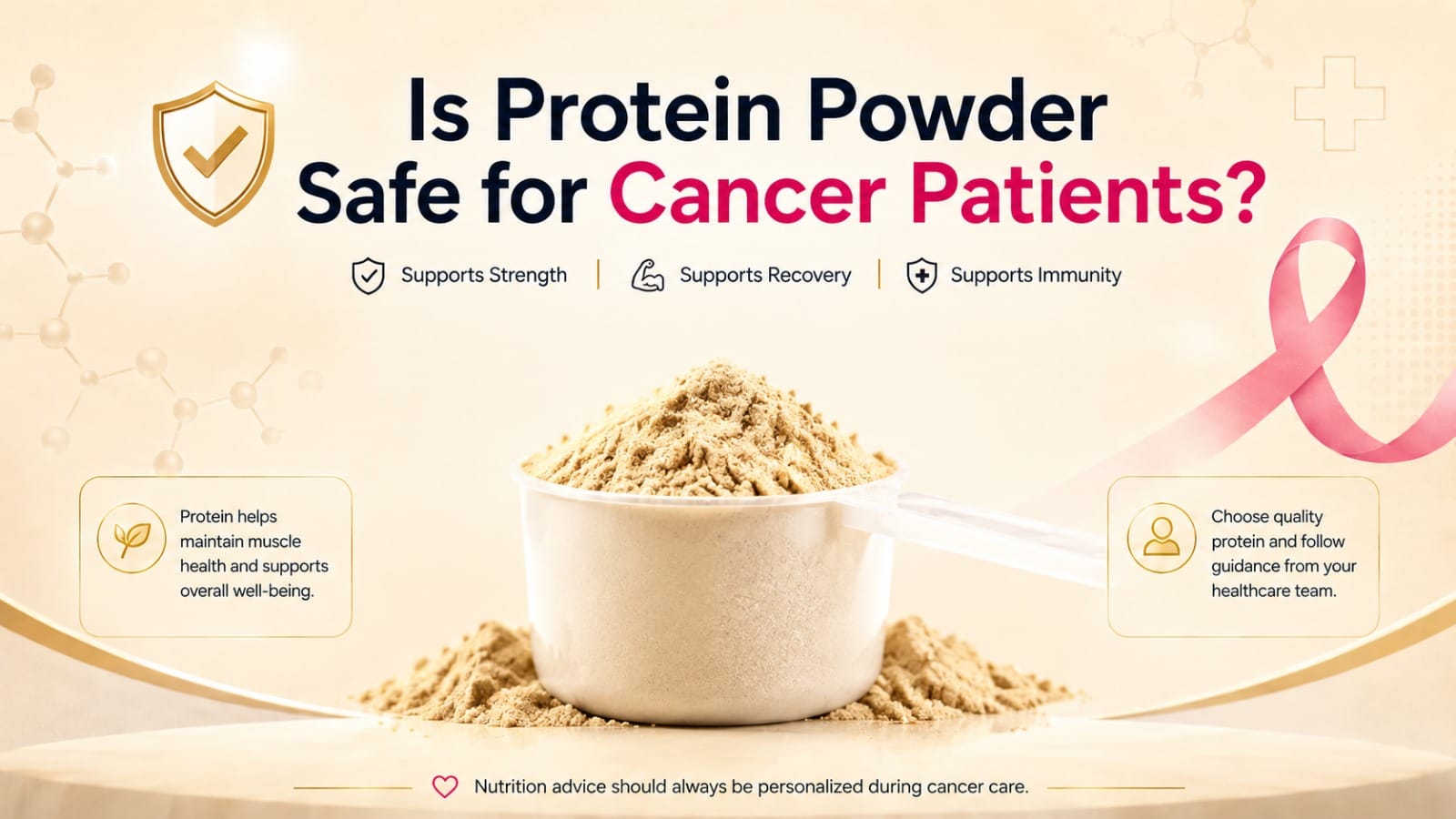
A cancer diagnosis often raises many questions about diet and nutrition. One of the most common concerns is whether protein powder is safe for cancer patients. Many people also believe that every cancer patient should take protein powder to stay strong during treatment. However, according to Dr. Sandip Ganguly, Medical Oncologist, this is one of the most common myths about cancer nutrition.
Protein plays an important role in helping the body maintain muscle mass, support tissue repair, and recover during cancer treatment. However, this does not mean that every patient needs a protein supplement. Whether protein powder is appropriate depends on several factors, including the patient’s nutritional status, ability to eat regular food, type of cancer, treatment plan, overall health, and individual protein requirements.
For many cancer patients, a well-balanced diet provides enough protein to meet their nutritional needs. If a patient can eat and digest regular food without difficulty, protein powder is usually unnecessary. It is not a routine part of cancer treatment and should not be started without medcancer treatmentical advice.
Protein powder can be safe and beneficial when it is recommended by a doctor or clinical dietitian, particularly for patients who are unable to meet their protein needs through food alone. The decision to use a protein supplement should always be based on an individual’s medical condition and nutritional assessment rather than the assumption that all cancer patients require it.
Why Is Protein Important During Cancer Treatment?
Protein is an essential nutrient that helps the body stay strong during cancer treatment. It helps:
- Maintain muscle mass
- Repair and build body tissues
- Support recovery after treatment or surgery
- Maintain overall strength and health
For most people, these protein needs can be met through a balanced diet.
Can You Get Enough Protein from Food?
In many cases, yes. If you can eat and digest food normally, everyday foods can provide the protein your body needs.
Good sources of protein include:
- Eggs
- Fish
- Lean meat
- Paneer (cottage cheese)
- Dal (lentils and pulses)
- Milk and curd
- Soy products
These foods also provide vitamins, minerals, and other nutrients that support overall health.
When Is Protein Powder Recommended?
Doctors or clinical dietitians may recommend protein powder or oral nutritional supplements when regular food cannot provide enough protein or calories.
This may happen if:
- You have difficulty chewing or swallowing food.
- Treatment for cancers of the mouth, throat, food pipe (esophagus), or stomach makes eating difficult.
- You are recovering from stomach or digestive surgery.
- Poor appetite or treatment side effects make it difficult to eat enough.
In these situations, protein supplements can help improve protein intake and support nutrition during treatment and recovery.
Key Takeaways
Protein is an important part of cancer nutrition, but protein powder is not necessary for every cancer patient. Many people can meet their protein needs through a balanced diet that includes protein-rich foods.
Protein supplements should only be used when recommended by your doctor or clinical dietitian. They can assess your nutritional needs and determine whether a protein supplement is appropriate for your condition and treatment plan.
Disclaimer:This article is for educational purposes only and is not a substitute for professional medical advice. Always follow the advice of your oncologist or clinical dietitian regarding your diet and nutritional supplements during cancer treatment.
Frequently Asked Questions
Q: Can I start taking protein powder on my own?
A: No. Never self-prescribe. Always consult your oncologist to see if your body actually needs it.
Q: Is natural food better than supplements?
A: Yes. If you can digest well, everyday foods like eggs, fish, meat, and dals are the best source of protein.
Q: Who actually needs protein powder?
A: Only those who struggle to eat solid food (e.g., mouth, throat, or stomach cancer or are recovering from digestive surgery.
Q: Is it safe to take extra protein to recover faster?
A: No. Excessive protein intake does not speed up recovery and can put dangerous stress on your kidneys.
Q: What should I ask my doctor?
A: Ask your oncologist: “Is a protein supplement safe for my specific treatment plan and kidney health?