
Ovarian cancer is not one single disease. The main types of ovarian cancer are epithelial ovarian cancer, germ cell tumors, and sex cord-stromal tumors. Each type can behave differently, so identifying the cancer type and stage is important when planning ovarian cancer treatment. Understanding these differences can help you have clearer conversations with your doctor about your diagnosis and care.
Types of Ovarian Cancer
Ovarian cancers are classified based on the type of cells where they develop. The three main categories are epithelial tumors, germ cell tumors, and sex cord-stromal tumors.
- Epithelial Ovarian Cancer – Epithelial ovarian cancer is the most common category and includes high-grade serous, low-grade serous, endometrioid, clear cell, and mucinous carcinomas. High-grade serous carcinoma is the most common subtype and may begin in the fallopian tubes before affecting the ovaries.
- Ovarian Germ Cell Tumors – Germ cell tumors develop from egg-producing cells and are more common in children, adolescents, and young adults. They include dysgerminoma, yolk sac tumors, teratomas, embryonal carcinoma, and mixed germ cell tumors. Some are benign, while others are malignant.
- Sex Cord-Stromal Tumors – These tumors develop from ovarian support cells and may produce hormones. Common types include granulosa cell tumors, Sertoli-Leydig cell tumors, fibromas, and thecomas. Hormone-producing tumors can cause symptoms related to changes in estrogen or androgen levels.
Why Knowing the Type of Ovarian Cancer Matters?
Finding out the exact type of ovarian cancer gives doctors important information about the disease. But the type is not the only factor that determines treatment.
Doctors also consider:
- The stage of the cancer
- Tumor grade
- Genetic and molecular features
- Whether the cancer has spread
- Previous treatments
- Overall health
This is why two people with ovarian cancer may not receive the same treatment.
Treatment Options for Ovarian Cancer
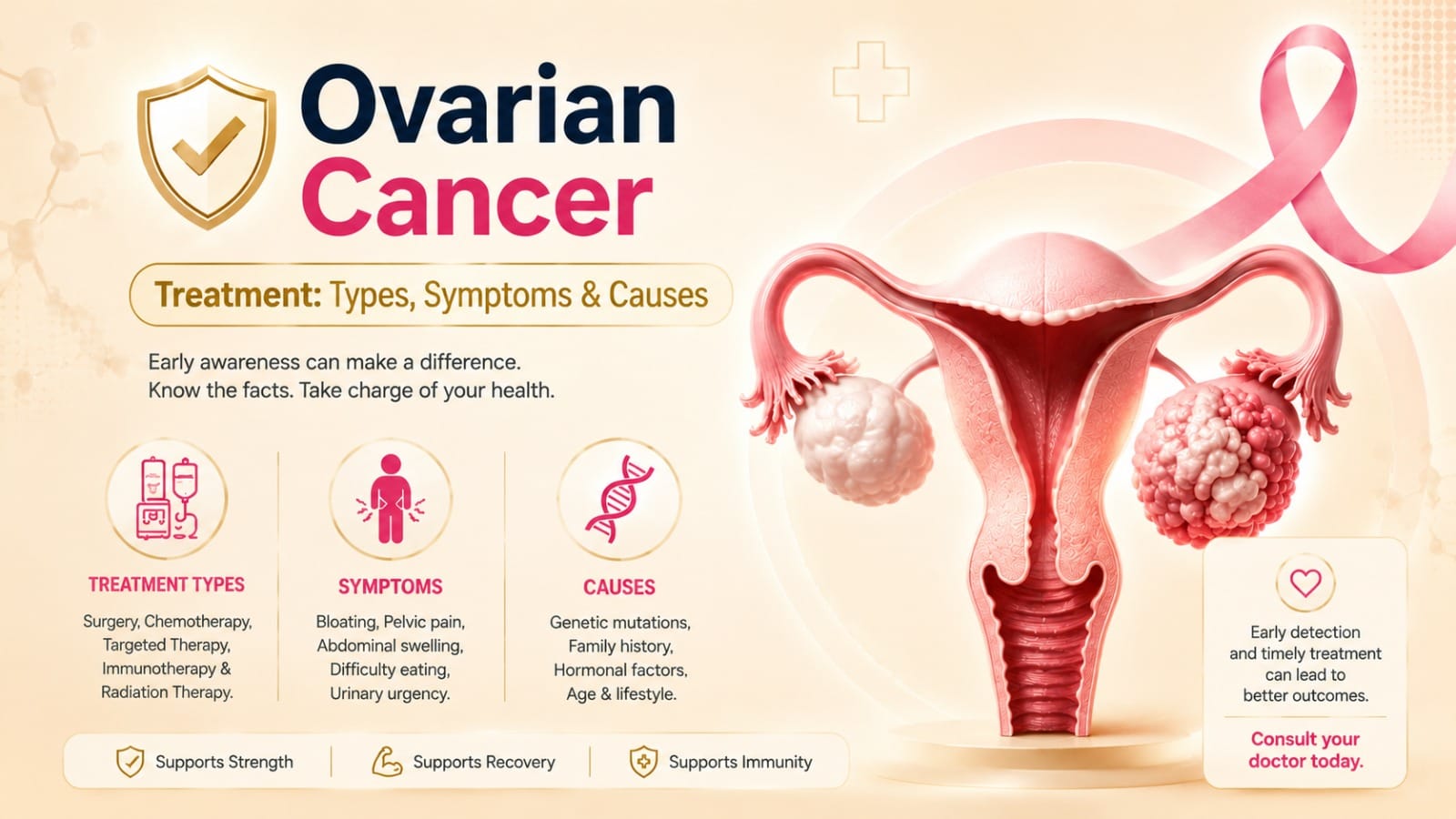
Ovarian cancer treatment depends on the cancer type, stage, tumor characteristics, and overall health. Treatment may include surgery, chemotherapy, targeted therapy, or hormone therapy.
Surgery
Surgery is an important part of treatment for many ovarian cancers. Depending on the cancer, it may involve removing the ovaries, fallopian tubes, uterus, or other affected tissues. In some advanced cases, debulking surgery may be used to remove as much visible cancer as safely possible.
Chemotherapy
Chemotherapy uses medicines to destroy cancer cells or slow their growth. It is commonly used for epithelial ovarian cancer and many malignant germ cell tumors. Depending on the situation, it may be given before or after surgery.
Targeted Therapy
Targeted medicines work against specific features of cancer cells. They may be considered for selected patients based on the genetic or molecular characteristics of the tumor.
Hormone Therapy
Hormone therapy may be an option for certain hormone-sensitive ovarian cancers. It is not suitable for every type of ovarian cancer.
What Are the Symptoms of Epithelial Ovarian Cancer?
Ovarian cancer symptoms can be easy to overlook because they may resemble common digestive or gynecological problems.
Possible symptoms include:
- Persistent bloating or abdominal swelling
- Pelvic or abdominal pain
- Feeling full quickly
- Changes in bowel habits
- Frequent or urgent urination
- Fatigue
- Back pain
- Pain during sex
- Abnormal vaginal bleeding
These symptoms can have many causes and do not necessarily mean cancer. However, persistent or unusual symptoms should be evaluated by a healthcare professional.
What Causes Epithelial Ovarian Cancer?
There is no single ovarian cancer cause. The disease develops when cells acquire genetic changes that affect normal growth and division.
Factors associated with an increased risk include:
- Increasing age
- Family history of ovarian cancer
- Inherited changes in genes such as BRCA1 and BRCA2
- Lynch syndrome
- Endometriosis
- Certain reproductive and hormonal factors
Having a risk factor does not mean that a person will definitely develop ovarian cancer.
How Is Ovarian Cancer Diagnosed?
If ovarian cancer is suspected, doctors may use several tests depending on the symptoms and medical history.
These may include:
- Medical and family history
- Pelvic examination
- Ultrasound
- CT or MRI scans
- Blood tests, including CA-125 when appropriate
- Biopsy or surgery
- Pathological examination of tissue
Imaging and blood tests can help identify abnormalities, while tissue examination is generally needed to confirm the diagnosis and determine the cancer type.
What Are the Stages of Ovarian Cancer?
Staging describes how far the cancer has spread and helps doctors plan treatment.
Broadly:
- Stage I: Cancer is limited to the ovary or ovaries and/or fallopian tubes.
- Stage II: Cancer has spread to other areas of the pelvis.
- Stage III: Cancer has spread beyond the pelvis within the abdominal cavity and/or to certain lymph nodes.
- Stage IV: Cancer has spread to distant areas of the body.
The exact stage is determined using surgical findings, imaging, pathology, and other clinical information.
When Should You See an Ovarian Cancer Specialist?
If you have symptoms that persist or seem unusual, it’s a good idea to speak with a doctor. If ovarian cancer is suspected or diagnosed, a gynecologic oncologist can help you understand your diagnosis and treatment options.
Looking for an ovarian cancer specialist in Kolkata or an ovarian cancer doctor at Apollo Hospital, Kolkata? Speak with a qualified specialist to understand your condition and discuss the right treatment options for you.
Frequently Asked Questions
What are the main types of ovarian cancer?
The main types are epithelial ovarian cancer, germ cell tumors, and sex cord-stromal tumors.
What are common ovarian cancer symptoms?
Symptoms may include persistent bloating, pelvic or abdominal pain, feeling full quickly, bowel or urinary changes, fatigue, and abnormal vaginal bleeding.
What causes ovarian cancer?
There is no single ovarian cancer cause. Genetic changes and certain risk factors can contribute to its development.
What does ovarian cancer treatment involve?
Ovarian cancer treatment depends on the cancer type, stage, tumor characteristics, and overall health. It may include surgery, chemotherapy, targeted therapy, or hormone therapy.
How is ovarian cancer diagnosed?
Doctors may use a medical history, pelvic examination, imaging, blood tests, and tissue examination to diagnose ovarian cancer.
Why does the type of ovarian cancer matter?
The cancer type helps doctors understand the disease and plan treatment along with factors such as stage, tumor grade, and genetic or molecular features.